8 August 2026


Table of Contents
- What is website architecture?
- Key Takeaways
- Site hierarchy and URL structure: the map Google follows
- Internal linking: the load-bearing walls of website architecture
- Crawlability and indexation: getting found and getting filed
- Structured data: making the structure machine-readable
- Navigation and what user behaviour tells Google
- URL structure: the path Google reads before your content does
- Internal linking shapes how search engines understand your site
- XML sitemaps: the shortcut Google doesn't always take on its own
- Closing Reflection
A guesthouse owner in Mbombela cannot find her own rates page on Google. Her homepage appears, but the page listing her prices does not. Forty pages have gone up over six years, each bolted on wherever there was room. No menu reaches half of the pages. Google found the front door, looked into two rooms, and gave up on the corridors.
What is website architecture?
Website architecture is the way your site's pages are organised and connected. It covers which pages exist, how they group into topics, what their web addresses look like, and how they link to one another. It works like the layout of a shop. A well-planned shop puts a sign at the entrance, groups related goods in the same aisle, and leaves no shelf unreachable. Google reads your site much as a first-time visitor reads that shop. When the layout is deliberate, Google can tell which pages belong together and which page leads each topic. When the layout is accidental, some pages go unfound, and the pages Google does find end up competing with each other.
Key Takeaways
- Your page hierarchy and web addresses tell Google which topics your site covers and which page carries the most detail on each one.
- Internal links do the structural work: pillar, parent, and child pages joined in a deliberate pattern build authority on a topic.
- A page Google cannot reach cannot appear in search results, whatever its quality.
- Structured data labels your pages in code Google reads directly, which can add ratings, prices, or opening hours to your listing.
- Navigation is the part of the structure your visitors see, and their behaviour is the final test of whether the layout works.
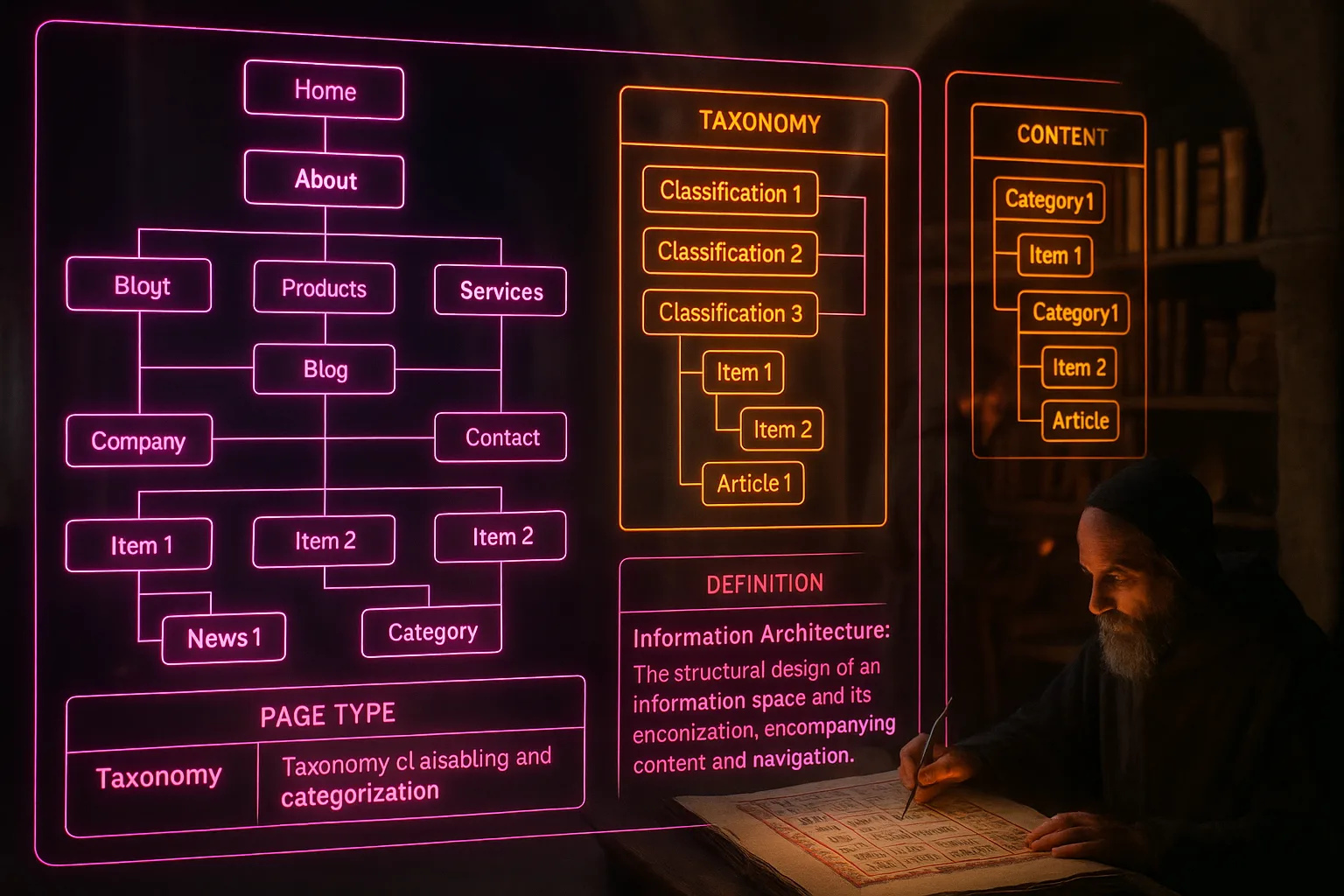
Site hierarchy and URL structure: the map Google follows
Hierarchy is the first signal Google reads on your site, because it shows which pages belong together and which page leads each topic. Picture an electrician in Polokwane with twenty service pages. On a planned site, the homepage points to a services page, and the services page points to geyser repairs, rewiring, and compliance certificates. Each web address then says where the page sits: /services/geyser-repairs rather than /page?id=847. One of those addresses is readable before the page even loads. Google's guidance recommends simple, descriptive URLs built from readable words rather than long ID numbers.
Depth belongs to the same signal. A page three clicks from the homepage reads as central, while a page buried seven clicks deep reads as an afterthought. Most small business sites need no more than three levels: homepage, topic, page. Every layer added below the third pushes good content further from view, and the pages down there earn fewer visits from Google's software and from people alike. Hierarchy is a judgement Google forms from your layout rather than your writing, so a strong page in a weak position loses to a weaker page in a strong one.
Internal linking: the load-bearing walls of website architecture
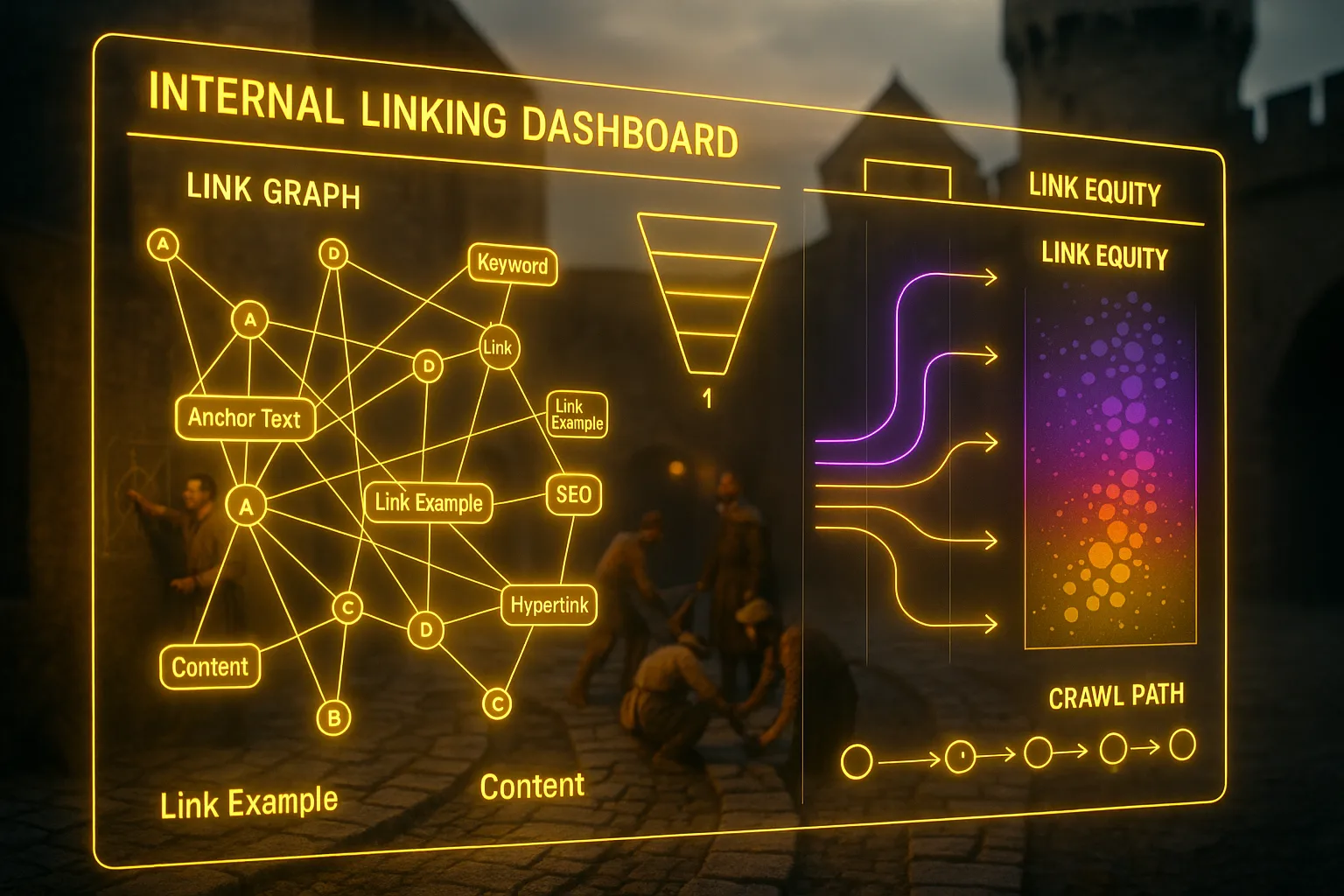
Internal links carry the whole structure, because Google discovers pages by following links from pages it already knows. Google's documentation on Search fundamentals describes its software, called Googlebot, finding new pages through links on known ones. A page nothing links to is a room with no door. No door, no visitors. The strongest pattern for a business site is the cluster. One broad pillar page anchors the main topic, parent pages cover each major subtopic, and child pages answer single questions underneath. Each child links up to its parent, and each parent links up to the pillar.
Search engine optimisation, or SEO, is the work of getting your pages found on Google, and it fails structurally more often than it fails editorially. Many sites have strong pages and no linking plan. That gap is often a structural weakness: the writing is done, but the walls meant to carry the building are missing. For a business owner, the useful question is not how many links a page has, but whether every page can be reached from the pages customers already visit.
Crawlability and indexation: getting found and getting filed
Before any page can appear in search results, Google has to find it and file it. Finding is called crawling: a piece of Google software named Googlebot visits your pages by following links from one to the next. Filing is called indexing: Google stores what it finds in the index, the huge list it keeps of every page it knows about. A page missing from the list cannot come up, however good it is. Filed, or invisible.
A sitemap closes the discovery gap. It is a file on your site naming every page you want found, so Google doesn't have to work out the route from links alone. Google's documentation on sitemap files notes they help most on new sites, large sites, and sites where pages link to each other poorly. The guesthouse owner from the opening has all three problems at once: no sitemap, thin menus, and forty pages joined by habit rather than by plan. Google Search Console, a free tool from Google, shows which of your pages sit in the index and which were found but left out. Checking it takes ten minutes, and what it shows usually decides where the next month of work should go.
Structured data: making the structure machine-readable
Structured data is hidden code added to a page, and it works as a label telling Google directly what the page contains. Without the label, Google reads a block of text on your page and guesses whether R450 is a price, a product code, or a phone extension. With the label, the guessing stops. Google's introduction to structured data describes a standardised format for labelling page content. Pages marked up this way become eligible for richer listings: star ratings, prices, or opening hours shown in the results before anyone clicks. Eligible is the honest word here, because Google decides when the extra detail appears and no markup forces its hand.
The labels come from the Schema.org vocabulary, a shared standard supported by the major search engines, so one set of labels serves them all. A guesthouse can mark up its rooms and rates; a physiotherapy practice can mark up its opening hours and location. All from a few lines of code. For a searcher comparing two listings, the one showing a rating and a price answers questions before the click. None of this rescues a broken layout. On a sound one, it turns pages Google has already found into listings a searcher can act on.
Navigation and what user behaviour tells Google
Navigation is the one part of your site's structure every visitor sees, and it gets judged in seconds. A menu with five clear groups sends people where they meant to go. A menu with fourteen entries, three dropdowns, and a Services link pointing at the homepage sends them back to the results. Straight back to Google, and on to a competitor. Google hasn't published a tidy list of behaviour signals it uses, and the industry argues about which clicks get measured. The practical answer doesn't depend on the argument, because a visitor who can't find the rates page doesn't book, whichever signal records the failure.
Google's public advice to site owners has pointed the same way for years. Pages arranged so visitors find their way around without effort are the pages its systems are built to reward. The pattern shows in numbers a business owner can already see. When most visitors leave from a menu page rather than a contact page, the structure is losing customers the content has already earned. A monthly look at those exit pages tells a truer story than most SEO reports do.

URL structure: the path Google reads before your content does
URL structure shapes how search engines interpret your site before a single word of body copy is processed. Google's own documentation confirms that URLs carry relevance signals and that words in a URL can be weighted as minor ranking factors. A messy path, like `/page?id=4872&ref=cat`, strips those signals entirely and replaces them with noise. The consequence isn't hypothetical: pages with descriptive, keyword-aligned URLs are easier for Googlebot to categorise, easier for users to trust in a results listing, and easier for other sites to link to accurately. If your current URLs are auto-generated strings, you're discarding a free structural signal at every page.
The mechanics go deeper than swapping hyphens for underscores. Folder depth, parameter handling, trailing slashes, and canonical consistency all feed into whether Google reads your architecture as coherent or contradictory. Our guide to URL structure for SEO covers each of these decisions in the order you'll need to make them, starting from the path you set at launch.
Internal linking shapes how search engines understand your site
Internal links help visitors move around your site, but they also tell crawlers which pages matter most and how topics relate to one another. Google's crawlers follow links to discover content, and the links on a page directly influence how PageRank flows through a site. Pages receiving few or no internal links are frequently under-crawled, meaning they sit in your CMS generating zero organic traffic while you wonder why strong content isn't ranking.
The implication is direct: a poorly planned internal linking structure buries your most valuable pages, regardless of how well-researched or well-written they are. Anchor text choices, link placement within body content rather than footers, and the logical grouping of related pages all shape the signals crawlers carry away from each visit.
If you want to build this out systematically, our guide to internal linking for SEO and crawlable site structure covers the decisions worth making deliberately, and the ones most sites get wrong by accident.
XML sitemaps: the shortcut Google doesn't always take on its own
Search engines discover pages by following links, but a complex or newly launched site can leave whole sections unvisited for weeks. An XML sitemap solves this by handing Google a direct list of every URL you want indexed, along with signals about when each page was last updated. Google's own documentation confirms crawlers treat sitemaps as a strong hint rather than a command, meaning a well-formed file won't override poor architecture, but it does reduce the margin for discovery failure on sites with thin internal linking or large page counts. The cost of neglecting one is concrete: pages generating no organic traffic not because they lack quality, but because no crawler has reached them yet. If your site has recently migrated, grown significantly, or carries content buried more than three clicks from the homepage, an XML sitemap is the fastest way to close that gap. Our detailed guide on XML sitemaps and search engine indexing covers format requirements, submission via Google Search Console, and common errors silently excluding pages from the index.
Closing Reflection
The guesthouse owner in Mbombela doesn't have a content problem. Her rates page is well written, her photographs are honest, and her prices are fair. The pages are there; the corridors between them are not. The fix is not another page. A plan for the forty already built, drawn before anything new goes up. Sites reworked this way tend to stop losing visitors in places the owner cannot see, because the layout at last carries the work the writing has been doing alone.
You shouldn't have to redraw your site page by page while enquiries go to competitors with fewer pages and better plans. With Zahavah Studio you won't.
Contact Zahavah Studio to map your website architecture and put every page where Google and your customers can find it.
Yvonne van Wyk
SEO Strategist · Zahavah Studio
Yvonne van Wyk runs Zahavah Studio, a Johannesburg SEO agency focused on long-term search visibility and AI citation. Her writing covers local SEO, content strategy, analytics, and the mechanics of how search works.