24 September 2026


Table of Contents
- What is property developer content marketing?
- Key Takeaways
- Why buyers search before they visit
- What suburb-level content does for your rankings
- The off-plan buyer and the content they need
- How to do keyword research for a development portfolio
- Building topical authority across a development portfolio
- Video content and its role in property developer SEO
- Consistency and compounding: the real return on content
- Closing reflection
- Frequently Asked Questions
A buyer in Pretoria East has already decided she wants to move. She knows the area, she knows the price range, and she has seen three show houses. Before she contacts any developer, she opens Google and types "new developments in Faerie Glen under 2 million". Two competing developers appear with suburb guides, investment return articles, and off-plan explainers answering every question she has not yet asked aloud. The third developer has a beautiful brochure site with drone footage and a contact form. It ranks nowhere. She never finds it.
What is property developer content marketing?
Property developer content marketing is the practice of publishing written, visual, or video content that answers the questions serious buyers type into Google before they contact a developer or visit a show house. It isn't a brochure published online. It is a deliberate strategy of producing articles, suburb guides, and investment explainers ranking in search results and moving a buyer from curiosity to enquiry, often weeks before any sales agent gets involved.
Key Takeaways
- Buyers research developments through Google long before they visit a show house or call a sales office, so your content must be present at that early stage.
- Suburb-level articles and area guides target the specific searches buyers make and rank better than generic development landing pages.
- Off-plan investment content attracts buyers who are evaluating their options and converts at a higher rate than price-led advertising alone.
- Video and visual content supports rankings and extends time on page, a signal Google treats as an indicator of relevance.
- A consistent publishing schedule compounds over time: six months of content builds organic traffic paid advertising can't replicate at the same cost.
- Property developer SEO works best when content answers the real buyer journey, from "what is off-plan" to "is this development worth the deposit".
Why buyers search before they visit
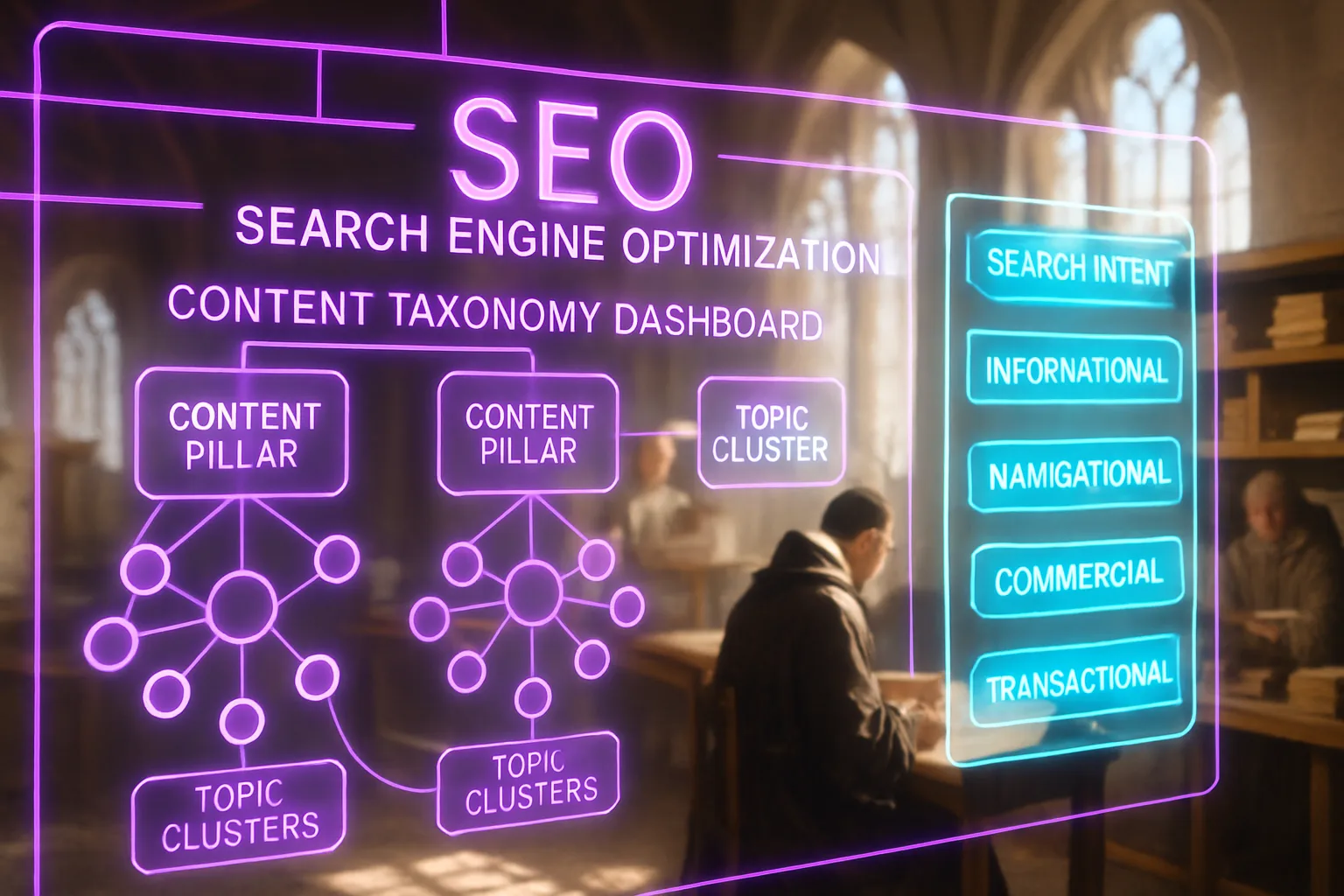
The property buying decision is one of the longest and most research-intensive purchases a person makes, and almost all of that research happens on Google before any human contact. According to real estate marketing data from Electroiq, the overwhelming majority of buyers begin their property search online, and most have formed a strong shortlist before they speak to a developer or agent. That is the window your content must occupy.
A developer treating their website as a digital brochure, with beautiful renderings, floor plans, a price range, and a contact form, is invisible during the research phase. The buyer has already moved on by the time a sales consultant follows up on a paid lead. The developers appearing at the research stage, through articles answering the questions a buyer is actively typing, earn a head start no advertising budget can easily replicate. Your content gets found because it answers specific questions; your brochure gets found only if someone already knows your name.
This is the core argument for property developer content marketing: it enters the buyer's journey at the moment of intent, not the moment of sale.
What suburb-level content does for your rankings
Generic content about property in South Africa ranks for nothing useful. Suburb-level content, articles targeting specific areas, specific price points, and specific buyer profiles, is where property developer content marketing earns its place in search results.
A developer building a sectional title complex in Centurion shouldn't be competing for the phrase "property for sale in South Africa". That phrase attracts the portals, the aggregators, and the national agencies. No developer with a single development, or even a portfolio of ten, will dislodge Property24 from that position. Instead, the same developer can own "new apartments in Centurion under 1.5 million" or "sectional title developments near Centurion CBD", searches with genuine buying intent and far less competition. These are the phrases a buyer types when she is close to a decision, not browsing.
Writing suburb guides goes beyond SEO. A guide covering the school catchment areas, commute times to Sandton, nearby retail, and the rental yield history of the suburb answers questions a sales agent would normally handle in a thirty-minute consultation. It builds credibility before any conversation starts. Developers publishing this content consistently find buyers arriving at the show house already sold on the area and asking only about the specific unit.
The table below compares content types used in property developer content marketing by search intent and typical buyer stage.
| Content Type | Buyer Stage | Search Intent | Typical Conversion Role |
|---|---|---|---|
| Suburb area guide | Early research | Informational | Builds awareness and trust |
| Off-plan investment explainer | Consideration | Informational / commercial | Educates and qualifies |
| Development landing page | Comparison | Commercial | Captures direct enquiries |
| Transfer and bond cost article | Late comparison | Informational | Reduces drop-off at decision |
| FAQ article on the buying process | Early to mid | Informational | Builds credibility with first-time buyers |
The off-plan buyer and the content they need
Off-plan purchases carry risk a completed development doesn't, and buyers researching off-plan projects ask a different set of questions. They want to know what happens if the developer cancels. They want to understand the deposit structure, the estimated transfer date, the track record of the developer, and whether the projected rental yield matches anything in the actual market. These questions aren't answered by a floor plan or a price list.
Your content strategy should treat these questions as a brief. Each question is an article. "How does buying off-plan work in South Africa?" is a real search with real volume, and a buyer typing it is in an active research phase. An article answering it completely, citing the Deeds Office transfer process, explaining the developer's obligations under the Housing Development Schemes for Retired Persons Act where relevant, and linking to your own developments, earns a qualified reader who arrives at your site with context. That reader converts at a meaningfully higher rate than a cold visitor clicking a paid ad.
Digital marketing guidance for real estate consistently covers the role of educational content in building buyer confidence, and the principle holds for off-plan sales above all other property categories. The higher the perceived risk, the more content has to do before a buyer will commit to an enquiry.
How to do keyword research for a development portfolio

Keyword research in property development isn't a technical mystery. It is the exercise of finding out what buyers type into Google at each stage of their decision. A keyword, in plain terms, is a phrase someone searches; a search volume tells you how many people search it each month; and ranking for a keyword means your page appears in the list of results when someone types it.
The practical approach for a developer starts with the developments themselves. For each development, list the suburb, the price range, the product type (freehold, sectional title, cluster, retirement estate), and the buyer profile. From those attributes, you can generate a working list of candidate phrases: "cluster homes in Waterkloof Ridge", "retirement estate Centurion buy", "off-plan two-bedroom Cape Town Atlantic Seaboard". Then research which of those phrases have search volume and which have manageable competition.
Real estate digital marketing guidance recommends targeting high-volume keywords strategically while also capturing lower-competition, longer search phrases converting more reliably. In property, those longer phrases often convert better than the short ones: a buyer typing "new three-bedroom cluster homes in Midrand under 2.5 million" is far closer to an enquiry than one typing "property Midrand". Your content calendar should mix both.
Building topical authority across a development portfolio
Topical authority is the idea a website ranking well for one property question is more likely to rank for related property questions, because Google treats consistent, specific coverage of a subject as a signal the site can be trusted on that topic. A site with one development page earns no authority. A site with a suburb guide, an off-plan explainer, a transfer cost calculator article, a FAQ on the buying process, and a news section covering local infrastructure investment builds a body of work Google recognises as relevant to property buyers in that area.
This is where property developer content marketing diverges sharply from what most developers do. The instinct is to publish content about the development: the design, the finishes, the amenity list. All of that belongs on the development's own landing page. The articles building authority and ranking in search are written for the buyer's questions, not the developer's features. Once a buyer trusts the site as a source of useful information, they follow the internal links to the development pages and the enquiry form.
Content marketing for SEO-driven real estate follows this pattern: authority pages on buyer questions feed traffic to conversion pages on specific products. The ratio of educational to promotional content on a high-performing property site tends to run roughly four to one. Four articles answering buyer questions for every one page selling a specific development.
Video content and its role in property developer SEO
Video carries particular weight in property marketing because buyers want to see what they are considering, especially when the product is off-plan and no physical structure exists yet. A two-minute walkthrough of a show unit, a drone fly-over of the development site, or a developer interview explaining the project timeline all serve as content keeping a visitor on the page longer than text alone.
Search engines treat time on page as one indicator of whether a page is delivering what it promised. A buyer watching a four-minute video stays longer than one reading a 300-word paragraph and leaving. That longer dwell time, combined with the search terms the video answers, strengthens the page's ranking signal. Research from Electroiq on video in real estate marketing shows video content materially improves lead generation for property listings, with the majority of marketers in the sector confirming its effect.
The practical implication for your content strategy: embed video inside your written articles and development pages, not as a substitute for written content but as a complement. Google indexes the written text and uses it to understand what the page is about; the video extends the visit and builds confidence in the product. Neither works as well without the other.
Consistency and compounding: the real return on content
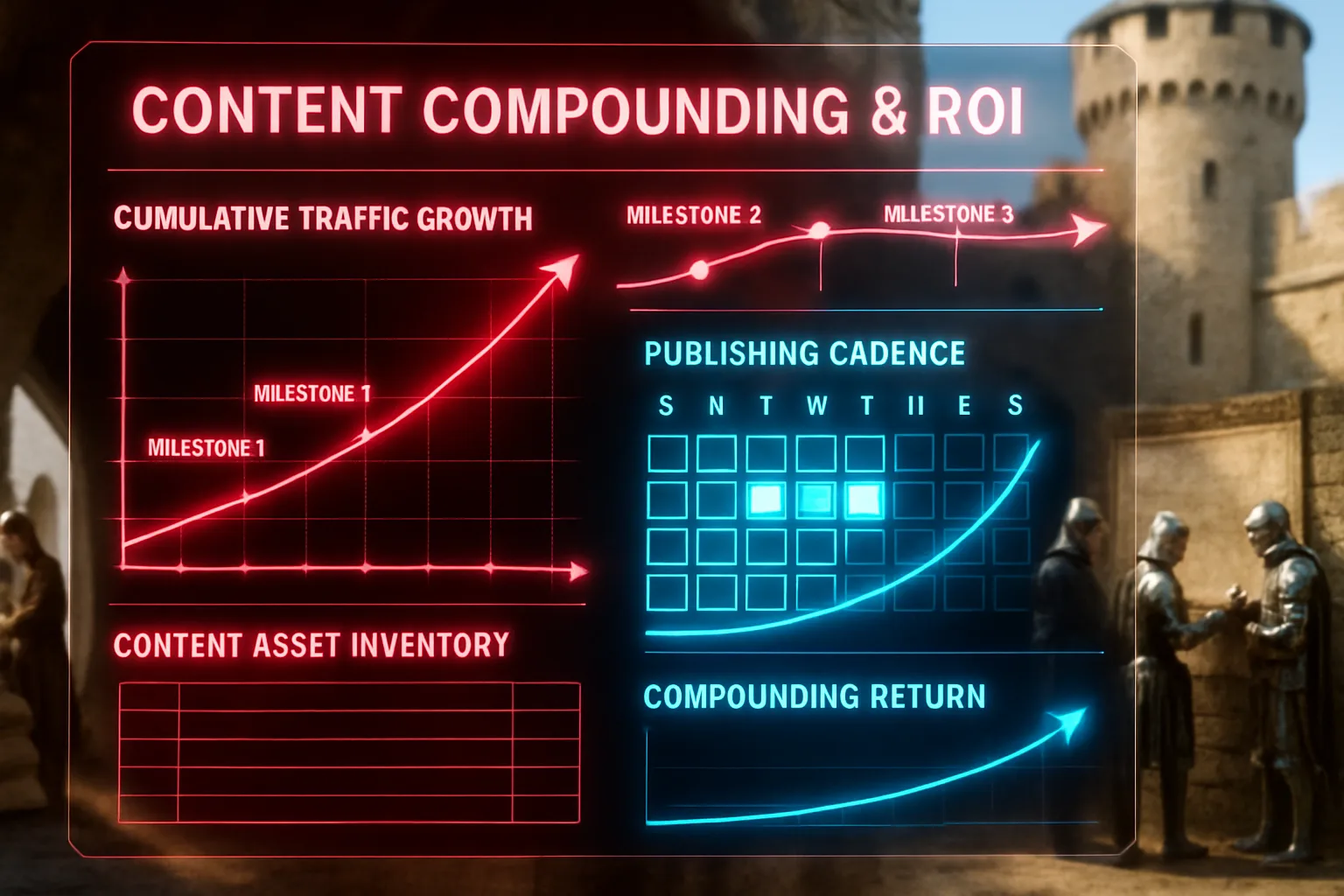
Most developers trying content marketing abandon it within three months. A developer in Cape Town publishes four articles, sees no enquiries, and decides the channel doesn't work for property. The decision makes sense if you measure content the same way you measure a paid ad: spend money, count leads, decide quickly. Content doesn't work that way.
Content marketing statistics across industries consistently show the return compounds over twelve to twenty-four months. An article published today may rank in six months. A catalogue of thirty articles, each targeting a different buyer question, may drive more qualified organic traffic in month eighteen than a paid campaign running the same budget. The paid campaign stops the moment the budget pauses. The articles keep ranking.
For a developer with a two-year build programme and a launch window six months from now, the content calendar should start today. By launch, a site with twenty well-targeted articles covering the suburb, the off-plan process, the transfer costs, and the buyer FAQ is already ranking for the phrases a buyer will type when they are ready. The developer waiting until launch to publish content is asking Google to rank new pages in the same week buyers need them. Google doesn't move quickly. Writing SEO-optimised content takes time to index and rank; the compounding effect only starts from the first publication date.
Closing reflection
Property buyers are doing their own research before they ever reach your show house, and the developers appearing during that research phase are the ones earning the enquiry. Content marketing for property developers isn't a branding exercise and it isn't a social media play. It is a long-term organic search strategy built on the questions your buyers are already asking. Start answering those questions now, and the compounding effect will still be running long after a paid campaign would have exhausted its budget and gone quiet.
You shouldn't have to wait for a show-house day to get in front of serious buyers. With Zahavah Studio you won't.
Contact Zahavah Studio to build a property developer content strategy targeting the searches your buyers are making before they ever pick up the phone.
Most of the questions buyers ask before contacting a developer are never answered on the developer's own website. The FAQ below covers the ones coming up most often when property developers start thinking seriously about organic search.
Frequently Asked Questions
How long does property developer content marketing take to show results?
Meaningful organic traffic from property developer content marketing typically appears between four and eight months after the first articles are published, provided the content is well-targeted and published consistently. Google needs time to find new pages, assess their relevance, and decide where to rank them in search results. The process called indexing isn't instant. A new article published today may not appear in search results for several weeks.
The compounding effect becomes visible later. A portfolio of fifteen to twenty articles covering suburb guides, buyer FAQs, and off-plan explainers tends to generate significantly more organic traffic in month twelve than in month three, because each article ranking raises the overall authority of the site and helps related pages rank faster. Developers treating content as a campaign with a short horizon almost always stop before the returns arrive. Those treating it as a publishing programme tied to their development timeline see a different outcome. If your developments have a two-year build cycle, your content calendar should begin the day contracts are signed, not the day the show house opens.
What kind of content converts property buyers?
Content converting property buyers answers the specific question a buyer is holding at each stage of their decision. At the early stage, suburb guides and area investment articles build awareness and establish your site as a credible source. In the consideration phase, off-plan explainers, developer track record articles, and transfer cost guides address the risk questions stopping buyers from enquiring. At the comparison stage, detailed development pages with pricing, floor plans, and video walkthroughs carry the conversion load.
The content type most developers underinvest in is the middle-stage piece: the article explaining what buying off-plan means, what happens to the deposit if the project is delayed, and how the levy estimate is calculated. These questions are real, they have search volume, and a buyer finding a developer's site answering them honestly is far more likely to trust your enquiry process than one finding only a price list and a contact form. Answering the uncomfortable questions in print signals competence and earns the kind of trust a glossy brochure cannot manufacture.
How do I find the right keywords for my development?
Start with your development's own attributes: the suburb or town, the product type (freehold, sectional title, cluster, retirement estate), the price bracket, and the buyer profile the development is designed for. From those attributes, you can build a list of candidate search phrases. Then check which phrases real buyers search using free tools such as Google's own search suggestion feature, which shows you what people type as you begin a query.
The phrases with the strongest buying intent are the longer ones: "new three-bedroom sectional title in Fourways" or "off-plan apartments Umhlanga under 2 million". These longer phrases, called long-tail keywords, carry fewer monthly searches than shorter phrases but convert at a higher rate because the buyer has already specified what they want. A developer ranking for twenty long-tail phrases covering their specific development and suburb will generate more qualified enquiries than one ranking for a broad phrase with high volume and low intent. Your keyword list should reflect the full range of your developments, not just the flagship product.
Should property developers publish content on their own website or on external platforms?
Your own website is the primary publishing platform, and content belongs there first. Articles, suburb guides, and buyer FAQ pages published on your own site build the domain's authority and drive traffic directly to your development pages and contact form. Content published on external platforms, property portals, LinkedIn, or industry publications, can support awareness but doesn't build your site's search authority directly.
The practical approach is to publish all substantive content on your site first, then distribute it or adapt it for other platforms. Some developers publish a full suburb guide on their site and share a condensed version on LinkedIn. Others write a media article for a property publication and link it back to the full piece on their site. The external exposure is useful; the compounding authority accrues only to the site where the original content lives. Treating your own domain as the hub and every other channel as a spoke is the structure keeping your SEO investment working for you over the long term.
How much content does a property developer need to publish?
There is no single answer, but a working benchmark for a developer with one or two active developments is two to four substantial articles per month. Each article should target a specific buyer question or search phrase and run to at least 800 words of genuine content. Four articles a month may seem modest, but over twelve months that is forty-eight pieces of content, each targeting a different buyer search, each compounding in authority as the others rank.
Quality determines whether an article ranks. An article of 1,200 words answering a buyer's question completely, with specific suburb data, accurate cost figures, and clear explanations, will consistently outrank a 400-word article gesturing at the same topic. Publishing quality content regularly is the standard finding across real estate digital marketing, and the evidence consistently supports fewer, better articles over frequent, thin ones. A developer publishing two strong articles a month will outperform a competitor publishing eight shallow ones, because Google rewards depth over output.

Yvonne van Wyk
SEO Strategist · Zahavah Studio
Yvonne van Wyk runs Zahavah Studio, a Johannesburg SEO agency focused on long-term search visibility and AI citation. Her writing covers local SEO, content strategy, analytics, and the mechanics of how search works.
Everything on this blog is written to inform and educate. It is for information only. Nothing here is professional legal, financial, or technical advice. If you are making a significant business decision, speak to a qualified professional first. Zahavah Studio works hard to keep this content accurate and current, but is not liable for decisions made based on what you read here.