21 September 2026


Table of Contents
- What is estate agent content marketing?
- Key takeaways
- Why the property portals don't solve your search problem
- The search intent map every estate agent should understand
- Suburb guides: the content format the portals can't replicate
- Market commentary and price trend articles
- The buying process explained, step by step
- How often to publish, and what happens if you don't
- Measuring whether your content is working
- Closing reflection
- Frequently asked questions
A seller in Sandton has decided to list her home. She doesn't reach for a pamphlet or call a number she found on a For Sale board. She opens Google and types "how much is my house worth in Sandton 2025". Three estate agency websites appear with detailed suburb guides, market trend articles, and valuation explainers. Her own agent, who sold her the house seven years ago, doesn't appear anywhere on page one. He has a website. He has sold forty properties in that suburb. Google knows none of it.
What is estate agent content marketing?
Estate agent content marketing is the practice of publishing written, visual, or video material answering the questions buyers and sellers are already searching for, before those people have chosen an agent. Rather than advertising a specific listing, the content targets the research stage: suburb guides, price trend articles, transfer cost explainers, and buying-process walkthroughs. Each piece builds search visibility and positions the agent as the credible, informed voice in their area, so enquiries arrive without a rand spent on paid ads.
Key takeaways
- Buyers and sellers spend weeks researching online before contacting any agent; content published during that research window captures them before competitors do.
- Suburb-specific guides and market commentary rank for the searches your ideal clients are already making, because general property portals rarely publish that depth of local detail.
- Content built around real property questions earns organic traffic compounding over months, unlike a paid listing stopping the moment the budget stops.
- A consistent publishing habit across three to six months produces measurable movement in search rankings for suburb-level and intent-specific queries.
- Repurposing a single article into a newsletter, a social post, and a short video multiplies reach without multiplying effort.
- Estate agent SEO works best when content and technical fundamentals are both in place; content alone on a slow or broken site won't rank consistently.
Why the property portals don't solve your search problem
The big property portals, Property24 and Private Property in South Africa, Rightmove in the UK, carry enormous authority in Google's index. They rank well for nearly every listing-level search, and any individual agent's listings appearing there benefit from that authority. But the portals don't solve the agent's search problem; they solve the portal's search problem. When a seller types "estate agent in Fourways with experience in sectional title" or a buyer asks "is Bryanston a good area to buy in 2025", the portal has no incentive to answer those questions. You do.
Research on real estate SEO strategy confirms consistent business details across the major platforms count for local authority, but the gap between an agent's portal presence and their own website content is where most of the organic opportunity sits. An agent whose own site publishes detailed, suburb-specific content occupies search territory no portal is competing for. That territory is where the consideration-stage buyer lives: the person who has been browsing listings for six weeks, has narrowed to two suburbs, and now wants to understand which one suits them. That person is worth finding.
The search intent map every estate agent should understand
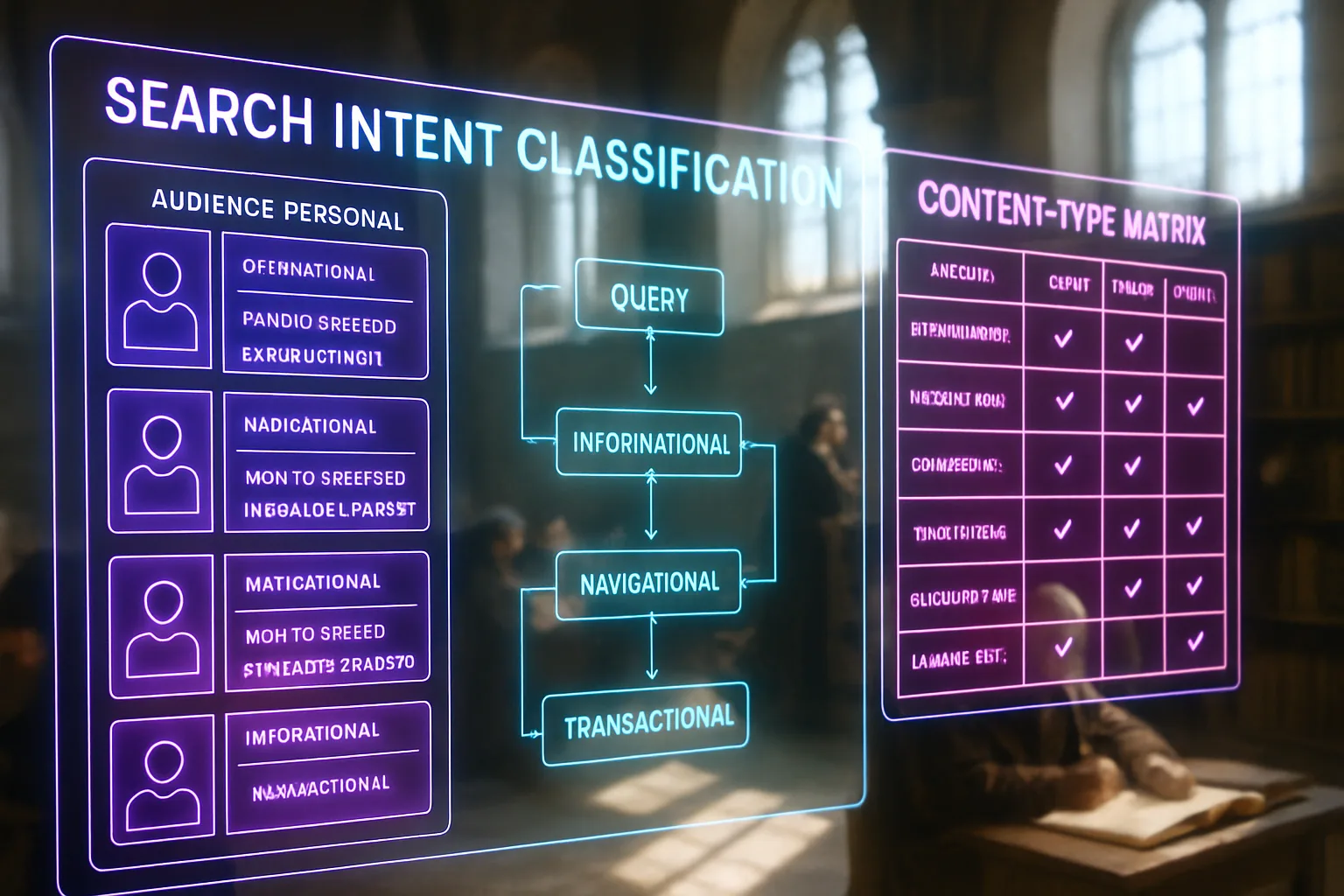
Not every property search carries the same buyer. Some are browsing. Some are comparing. Some are ready to call. Your content needs to match each intent, because Google rewards pages meeting the need behind the search, not pages merely about the topic.
Search intent mapped to content type for estate agents
| Search intent | Example query | Content type to publish |
|---|---|---|
| Awareness | "Is Cape Town property a good investment?" | Market commentary, suburb overview |
| Consideration | "Best suburbs to buy in Cape Town under R3m" | Comparison guide, suburb breakdown |
| Decision | "Estate agent in Bloubergstrand" | Service page, Google Business Profile |
| Seller-specific | "How to sell my house quickly in Johannesburg" | Process guide, valuation explainer |
| Cost-related | "Transfer costs when buying property in South Africa" | Cost breakdown article |
A content strategy covering all five rows has an answer ready for a buyer at every stage of their journey. Most agent websites cover only the Decision row, with a generic "contact us" page and a listings feed. The other four rows are open ground. According to data on real estate marketing statistics, organic search drives 53 percent of website traffic for estate agents, and organic and paid search together account for 57 percent of visitors. The agents capturing that traffic are publishing content matching what people actually search, not what the agent wants to say about themselves.
Suburb guides: the content format the portals can't replicate
A suburb guide isn't a listing page. It is a 1,200 to 2,000 word article about a specific area: the price ranges, the schools, the lifestyle, the typical buyer profile, the average time on market, and the year-on-year price movement. Property24 doesn't write these. Lightstone publishes data, but not narrative. Nobody is explaining to a first-time buyer from Nairobi relocating to Johannesburg why Morningside suits young professionals while Parkhurst suits young families, and what the price difference looks like in practice.
That explanation, published on your website, can rank for "moving to Johannesburg suburbs" or "best suburb to buy in Johannesburg for young professionals" because no portal is answering that specific question. The four content types every estate agent needs include this kind of awareness content, attracting people before they are even ready to contact an agent. Publish suburb guides for every area you work in. Update them when a significant sale changes the average. A guide published in February and updated in October stays relevant; a guide published once and forgotten decays.
Market commentary and price trend articles

Sellers, in particular, search for price context before they pick up the phone. A seller in Pretoria East won't call three agents for a valuation before first checking whether it's a good time to sell, whether prices have moved in her street, and whether her neighbour's recent sale at R2.8 million is typical or an outlier. An agent who has published a "Pretoria East property market update: Q1 2025" article is already in the room when she opens Google.
Market commentary doesn't require proprietary data. It requires applying local knowledge to publicly available Deeds Office transfer data, Lightstone reports, or FNB's property barometer, and writing in plain language a seller can understand. Keep the language direct: what prices did in the last quarter, how long properties are sitting before offers come in, and what type of property is moving fastest. That is useful. That is what sellers search for. Google's own guidance on SEO-aligned content goals emphasises content objectives need to align with genuine business outcomes, not vanity publishing. A market commentary article with a valuation enquiry form at the bottom is aligned: the content earns the reader, and the form captures the lead.
The buying process explained, step by step
A first-time buyer in Durban doesn't know what an offer to purchase is. She doesn't know the difference between a bond originator and a bank. She doesn't know transfer costs are separate from bond registration costs, or the conveyancing attorney is appointed by the seller, not chosen by her. She is searching for all of this information, one question at a time, before she books a show house.
A content strategy for estate agent SEO covers these process questions with dedicated pages: what happens after an offer is accepted, what transfer costs look like on different purchase prices, what a suspensive condition means, how long transfer takes. These aren't marketing pages. They are reference pages, and Google treats them accordingly. A detailed real estate content marketing strategy for 2026 confirms content combining genuine expertise with useful structure consistently outperforms generic articles on the same topics, whether written by humans alone or with AI assistance. The agent publishing a genuinely useful transfer cost calculator or a step-by-step buying timeline owns that search territory in their market.
How often to publish, and what happens if you don't
The question most agents ask is how much content is enough. The honest answer is frequency counts less than consistency. An agent publishing one well-researched suburb guide per month will outperform an agent who publishes eight articles in January and nothing for the next five months. Google measures freshness at the site level, not only the page level. A site publishing nothing in four months looks, to a search engine, like a site stopped operating.
A practical habit for most agents is one substantial article every two to three weeks. That pace is achievable without a full-time writer and, over a year, produces between eighteen and twenty-six pieces of content covering the agent's core suburbs and buyer questions. Research on real estate keywords for SEO recommends starting with five to ten core topics and building out from there, which maps neatly to an agent's working territory. From one well-written article, the content can be repurposed: a newsletter version to the existing database, three or four social posts across the week, and a short video summary filmed on a phone during a show house break. Google's documentation on what SEO expertise involves is consistent on one point: the site owner is ultimately responsible for the quality of what is published under their domain. An agent publishing thin, duplicated, or AI-generated content without genuine expertise layered in takes a reputational risk as well as a rankings risk.
Measuring whether your content is working

Content not producing enquiries isn't content marketing; it's publishing. Measuring whether estate agent content marketing is generating real business requires looking at more than page views. The right signals are: which articles are attracting visitors who then visit the contact page or the valuation request page; which suburb guides are generating time-on-page above two minutes, suggesting genuine reading rather than bouncing; and which topics produce return visitors, the buyer who reads the suburb guide in March and comes back in May when ready to book a viewing.
Google Search Console, a free tool from Google, shows which search queries are sending people to each article, how often the page appears in search results, and how often searchers click it. That data tells you which topics are earning search visibility and which pieces need updating to perform better. A suburb guide appearing in search results often but earning few clicks usually has a title or description not matching what the searcher was hoping to find; fixing those two elements can lift clicks without touching the article. The gap between impressions and clicks is one of the least expensive improvements available to an agent's content programme.
Closing reflection
Property search begins online, weeks or months before any agent gets a phone call. The agents appearing during that research phase, with content answering the specific questions buyers and sellers are already asking, don't need to outspend the portals or run continuous paid campaigns. They need to publish the right material, consistently, in the suburbs they work. The difference between an agent with a brochure website and an agent with a content programme isn't technical. It's a decision about whether to be present in the research conversation or to wait for someone else to send a referral.
You shouldn't have to watch buyers and sellers choose a competitor who published one good suburb guide before you did. With Zahavah Studio, you won't.
Contact Zahavah Studio to build an estate agent content programme targeting the suburb searches your competitors haven't claimed yet.
There are questions agents ask repeatedly about content marketing, and the answers tend to be more specific than the general guides suggest. The ones below cover the practical detail most relevant to agents working South African residential markets.
Frequently asked questions
How long does estate agent content marketing take to show results?
Most estate agents see meaningful movement in organic search rankings within three to six months of consistent publishing, though the timeline depends on how competitive your suburb search terms are and how established your domain is. A new agent website with no existing content and no backlinks will take longer than a site live for several years, already carrying some domain authority. Domain authority is the measure of how trustworthy and credible Google considers a website based on the links pointing to it from other sites.
The three-month mark is typically when Google has indexed enough of your new content to begin assigning it to relevant searches. By six months, a consistent publishing habit of one to two articles per month should produce measurable changes in which queries send traffic to your site. Organic search compounds rather than spikes: an article published in month one continues attracting traffic in month twelve, adding to the total rather than replacing it. Agents stopping publication at month four because results feel slow lose the compounding effect they were building toward. The cost isn't slower growth alone; it is handing the search territory back to whoever kept publishing.
What topics should my estate agent content cover first?
Start with the suburb or suburbs where you do most of your work, and cover two questions buyers and sellers in those areas type into Google before contacting anyone. For sellers, the question is usually some version of "what is my house worth" or "is now a good time to sell in [suburb]". For buyers, it tends to be a lifestyle or value question: "best suburbs in [city] for families" or "what does R3 million buy in [suburb] in 2025".
Those four to six articles, one suburb guide per area and one market commentary per area, give your site the foundational content needed to establish relevance for your geographic target. After that, add process content: buying guides, transfer cost explainers, and bond application walkthroughs. These attract buyers at the research stage and build the kind of sustained, returning traffic signalling genuine authority to search engines. Keyword research tools can help refine which specific phrases carry more search volume, but genuine local knowledge layered into the article is what makes one agent's suburb guide rank above another agent's generic version.
Do I need a separate page for every suburb I work in?
Yes, in most cases. A single "areas we cover" page listing eight suburbs does almost nothing for search visibility, because it gives Google no depth of information about any of those areas. Google rewards specificity. A dedicated suburb guide of 1,200 or more words, covering price ranges, lifestyle, school zones, and typical buyer profiles, gives the search engine enough to understand your site is a useful resource for someone researching a specific area.
If you cover fifteen suburbs, you don't need to publish fifteen suburb guides in the same month. Prioritise the three to five suburbs producing most of your current business and publish those first. A well-written suburb guide for Constantia will outrank a thin placeholder page for Constantia within a few months if the guide genuinely answers what buyers searching that area want to know. Each suburb guide also supports your Google Business Profile for estate agents, reinforcing the geographic signals helping your listing appear in the local map pack for area-based searches.
Can I use AI to write estate agent content?
AI tools can accelerate the drafting process, but they can't replace the local knowledge making an estate agent's content worth reading and worth ranking. A model producing a suburb guide for Bryanston has no knowledge of the specific sectional title complex changing hands recently at a new price benchmark, the school affecting demand in the northern section of the suburb, or the access road construction depressing one street's values for the past eighteen months. That specific, current, local knowledge is precisely what separates a useful suburb guide from a generic article Google's systems increasingly recognise as thin.
The practical approach is to use AI for structure and drafting speed, then layer in your own expertise, current data from Deeds Office records or Lightstone, and specific observations from your recent transactions. An article combining both is faster to produce than a fully manual piece and more useful than a fully generated one. The result is content meeting the standard of genuine helpfulness search engines reward: content written by someone who actually knows the subject. Agents publishing AI-generated suburb guides without that local layer are producing the exact kind of thin content the portals already do better, and at scale.
How do I turn content readers into actual property enquiries?
The gap between a reader and an enquiry is usually a conversion element, not a content problem. If your suburb guide is attracting visitors who read for two minutes and then leave, the article is doing its job; the page is failing to give them a clear next step. Every content piece should carry one specific call to action matched to where the reader sits in the decision process.
A market commentary article aimed at sellers should end with a link to your free valuation request. A buying guide should link to a suburb consultation form or a viewing booking page. A transfer cost explainer should link to a contact page framing your offering in terms of the process they just read about. Keep the ask proportionate to the commitment level: a seller reading a market article isn't ready to commit to a mandate, but they may well submit a valuation request. Capture that step, nurture the relationship through a follow-up email, and the mandate conversation happens naturally. The content earns the reader; the structure of the page converts them.

Yvonne van Wyk
SEO Strategist · Zahavah Studio
Yvonne van Wyk runs Zahavah Studio, a Johannesburg SEO agency focused on long-term search visibility and AI citation. Her writing covers local SEO, content strategy, analytics, and the mechanics of how search works.
Everything on this blog is written to inform and educate. It is for information only. Nothing here is professional legal, financial, or technical advice. If you are making a significant business decision, speak to a qualified professional first. Zahavah Studio works hard to keep this content accurate and current, but is not liable for decisions made based on what you read here.