31 October 2026 · Updated 2 November 2026


Table of Contents
- What is estate agent link building?
- Key takeaways
- Why links move estate agent rankings where content alone cannot
- The link sources South African estate agents can earn
- What earns a link versus what wastes the budget
- How to approach outreach without wasting your agents' time
- Tracking whether your link building is working
- Closing reflection
- Frequently asked questions
A principal agent in Sandton pulls up the search results for "houses for sale in Bryanston". Her agency has fourteen active listings in that suburb. Property24 and Private Property fill the top spots, as expected. Below them, two competitor agencies appear on page one. She does not. Her website has more listings, more agents, and more area expertise than either of those two practices. What it doesn't have is other websites pointing to it. Google has no reason to trust it above agencies that do.
What is estate agent link building?
Estate agent link building is the process of earning references from other credible websites back to your agency's site. Each of those references, called a backlink, works like a vote in Google's eyes. When a property portal, a local news outlet, a suburb guide, or an industry body links to your agency, Google reads it as a signal that your site deserves to appear higher in search results. The more credible the linking site, the stronger the signal.
Key takeaways
- A backlink is a link from another website to yours. Google counts quality backlinks as signals of authority and uses them to decide which estate agent sites rank above others.
- Real estate sits among the most competitive categories for link authority. Top-ranking property sites average around 248 referring domains pointing to them.
- Property portals, suburb guides, local news outlets, and industry bodies are the highest-value link sources for South African estate agents.
- Paid link schemes and directory submissions to hundreds of sites waste budget and can damage your rankings. Google actively discounts them.
- Estate agent link building compounds over time. A link earned in February still passes authority in November, while a paid ad stops the moment billing stops.
- Earning links requires something worth linking to: a suburb guide, a market report, a genuinely useful resource a journalist or portal would reference.
Why links move estate agent rankings where content alone cannot
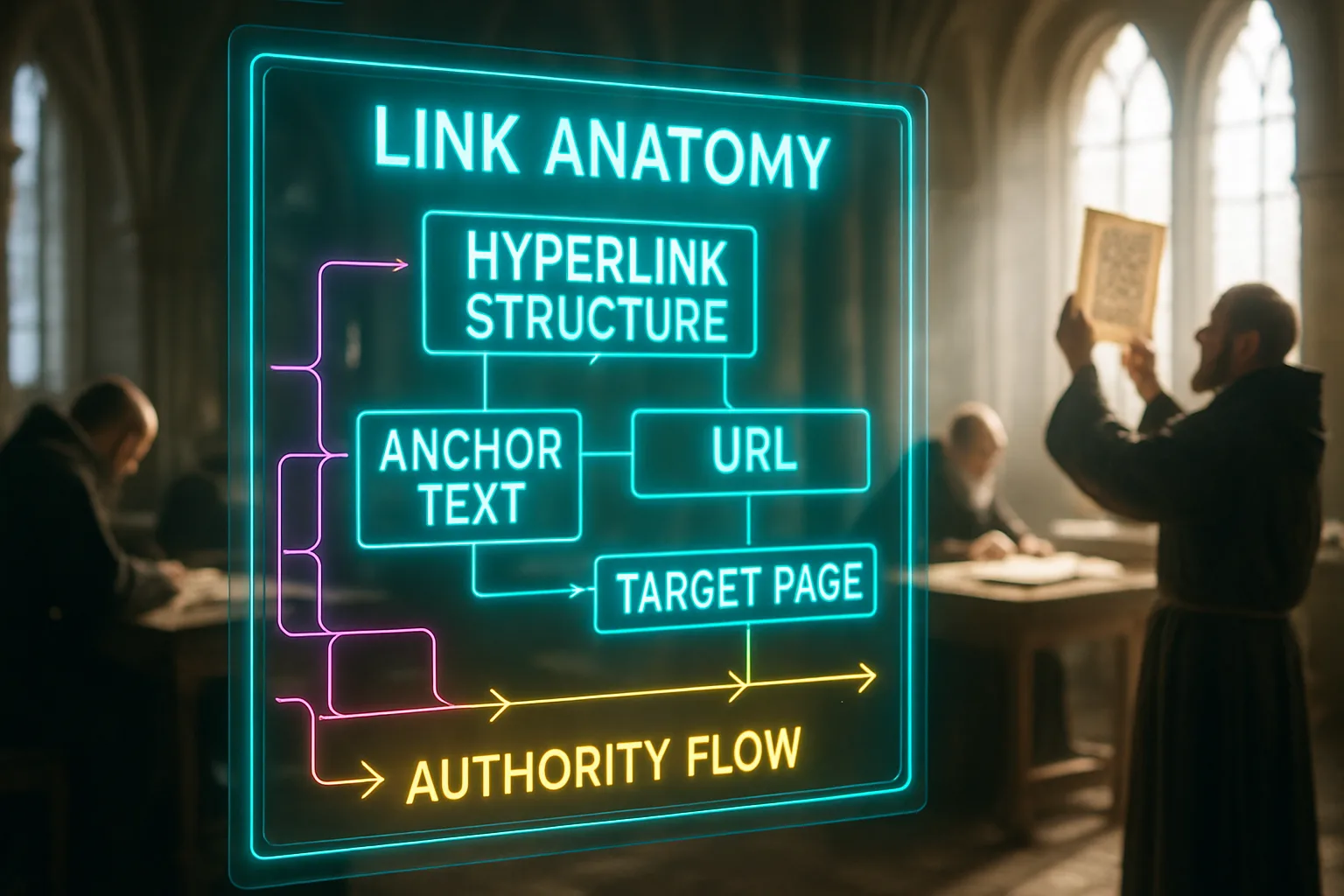
Content on your site tells Google what your agency does. Links from other sites tell Google whether your agency deserves to be found. The distinction is consequential because Google uses both signals together, and on a competitive search like "estate agents in Fourways", the agencies with stronger link profiles tend to sit above those without them, regardless of which site has more listings or better photography.
Google's own documentation on link-based popularity has been consistent on this point for years: links from relevant, trusted websites signal a page has earned its position. The practical implication for your agency is straightforward: if two sites are otherwise similar, the one with more credible references pointing to it will rank higher. An agency in Stellenbosch competing against a national franchise has no shortcut past that arithmetic.
The competition for link authority in property is more intense than in most professional services. Data covering top-ranking property sites shows an average of 248 referring domains, higher than most sectors outside finance and insurance. That figure isn't a target to hit overnight. It is context: the agencies sitting at the top of results for suburb-level searches have accumulated those references over years, and the gap closes the same way.
The link sources South African estate agents can earn
Not every link is available or worth pursuing. For a South African estate agency, the realistic and high-value sources fall into a short list.
Property portals are the obvious starting point. Property24, Private Property, and similar platforms already dominate search results, and most of them allow registered agents to carry a profile page linking back to the agency's own site. Those links carry genuine weight because the portals rank well and are considered authoritative by Google.
Local and suburb-level news outlets cover the property market regularly. A new development, a record sale price, or a market commentary piece quoting your principal agent gives a journalist a reason to name your agency and link to it. Estate agents with a habit of providing comment to local property journalists accumulate these links without a formal outreach programme.
Business and property associations you already belong to, such as a local business chamber, often keep member directories with a link to each member's website. A listing there is a relevant link costing little beyond the membership your agency already holds.
Community and neighbourhood platforms, including local Facebook groups with associated websites and suburb-specific property guides, often publish area guides linking to specialist local agents. These links are low difficulty to earn and specific enough to reinforce your suburb-level relevance.
Average referring domains pointing to the top ten ranking sites, by industry
| Industry | Average referring domains (top 10) |
|---|---|
| Finance and insurance | 312 |
| Real estate | 248 |
| Health and medical | 207 |
| Local services | 28 |
Source: Searchlab link building statistics 2026, drawing on Ahrefs and Semrush industry data. These are global averages, not South African figures.
What earns a link versus what wastes the budget

The estate agent SEO market in South Africa has no shortage of vendors offering to "build 500 backlinks" for a fixed monthly fee. Google's own guidance on legitimate SEO makes the cost of that approach plain: Google tells businesses to avoid SEOs who talk about link popularity schemes or submitting a site to thousands of search engines, calling these typically useless exercises. Some go further and actively harm the site by attracting a manual penalty.
What earns a link is simpler and slower: you produce something a credible website would reference, then you make sure the right people know it exists. For an estate agency, that tends to mean:
- A suburb guide with current, specific market data. A page showing the average sale price per square metre in Parklands over the past twelve months, with a breakdown by property type, gives a journalist writing a property feature something to link to.
- A market commentary piece written by your principal, quoted in a regional paper or business publication. The outlet links to your site when they publish the piece.
- A downloadable transfer cost calculator or a first-time buyer checklist. These are the kinds of resources suburb-focused websites and personal finance bloggers reference when explaining the property buying process.
- A development announcement or a notable transaction. Agencies selling a significant property often earn a mention in local business media, and those mentions carry a link when the outlet has an editorial standard.
The pattern across each of these is the same: the link follows the substance. An agency without useful, specific content can't earn useful, specific links.
How to approach outreach without wasting your agents' time
Most estate agencies aren't going to run a formal link-building programme the way a large media company would. The outreach producing results for a South African agency is targeted and built on relationships already in place or one conversation away.
Local property journalists are the most direct target. South Africa has active property desks at publications including Business Day, News24 Business, the Daily Maverick business section, and various regional outlets. A principal agent who sends one useful market commentary piece per quarter, with clear data and a firm opinion, will accumulate press mentions and links faster than an agency paying for generic directories.
Estate agent content marketing sits at the foundation of this approach. Content a journalist could reference is the precondition for earning links. An agency without a single useful piece of content will find outreach produces nothing.
The most effective link building approaches centre on producing something of genuine value first, with outreach as the distribution mechanism rather than the substance. Agencies treating link building as a content distribution problem, rather than a transaction, earn more links at lower cost over a twelve-month horizon.
The practical process looks like this: identify three to five local publications covering your suburb or development area, build a list of the journalists covering property at each one, and send them a short, specific market observation with your data behind it. Not a press release. A useful thing. Do it consistently.
Tracking whether your link building is working
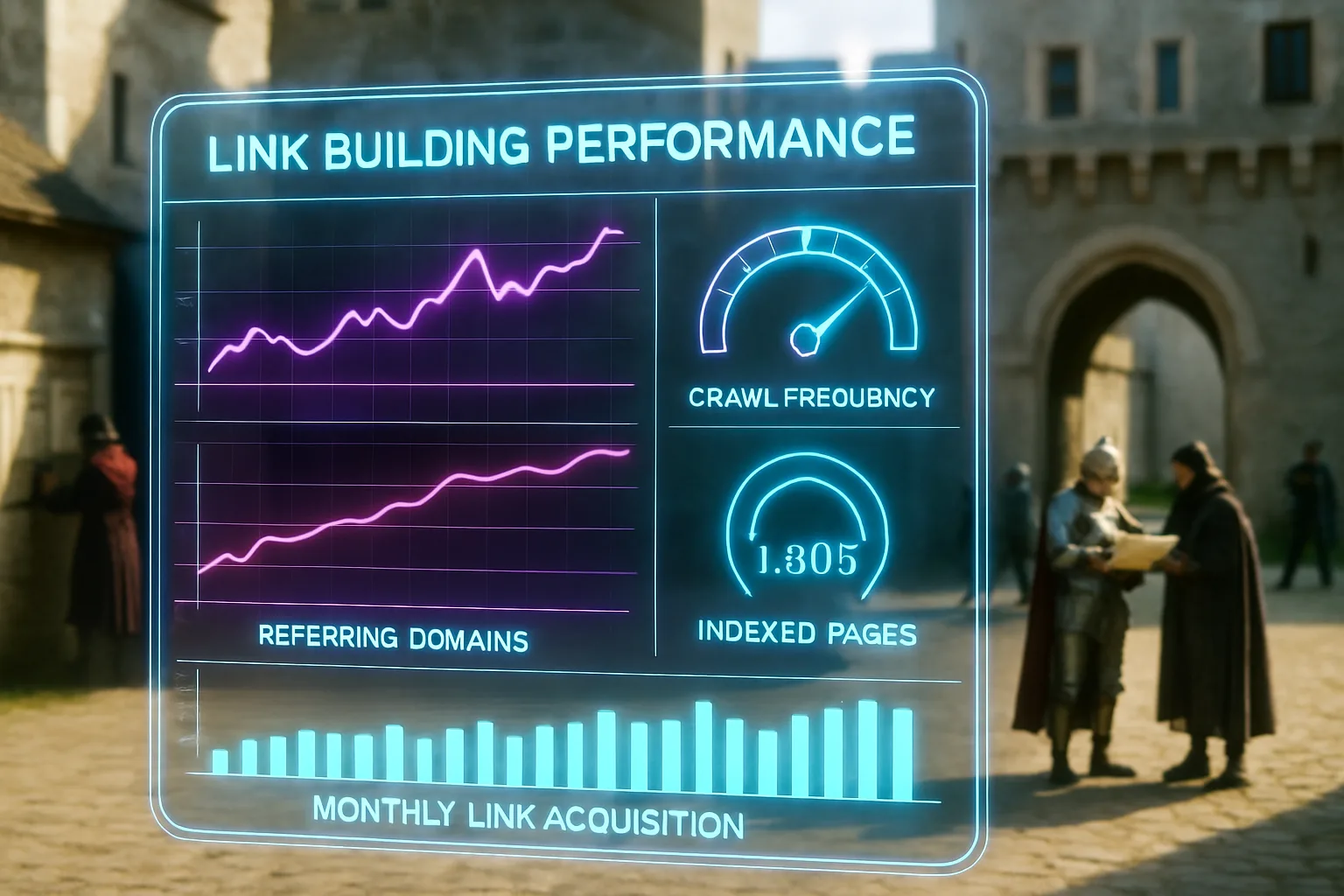
A backlink you can't measure is budget you can't defend. The tracking here doesn't require expensive software, but it does require a consistent habit.
The two numbers worth monitoring are the count of unique referring domains pointing to your site and the authority score of those domains. A referring domain is a separate website. One website linking to you ten times still counts as one referring domain. A hundred domains each linking once is a stronger signal than one domain linking a hundred times.
Tools including Ahrefs, Semrush, and Moz's Link Explorer will show you both numbers. Google Search Console, which is free, shows you which sites Google has noticed linking to you and which pages on your site those links point to. For most estate agencies, checking these numbers once a month is sufficient. What you're looking for is a slow, consistent increase in the number of unique referring domains over a six to twelve month period. A sudden spike followed by a plateau usually signals a bought link package, not earned authority.
The quality check is simple: open each referring domain and ask whether it is a site a property buyer or seller in South Africa would recognise as credible. If the answer is no, the link is contributing little to your rankings and may attract negative attention from Google's quality systems.
Closing reflection
Estate agent link building isn't a campaign you run for three months and then stop. The agencies sitting at the top of suburb-level searches in South Africa have accumulated their link profiles the way a good agent accumulates a reputation: slowly, through work genuinely useful to someone. A press mention for a well-timed market commentary, a suburb guide a local journalist bookmarks, a portal profile pointing back to your site. Each of those is a small thing. Over two years, they add up to the kind of authority making a listings page rank where paid advertising can't reach.
You shouldn't have to guess which links are helping your rankings and which ones are pulling them down. With Zahavah Studio you won't.
Contact Zahavah Studio to begin an estate agent link building audit identifying what your site has, what it needs, and which opportunities in your market area are worth pursuing first.
The questions below address what estate agents most commonly ask when they start thinking seriously about link authority and how to measure it.
Frequently asked questions
Why should real estate agents focus on estate agent link building?
Your listings page and your contact details are only useful to a buyer or seller if they appear in search results. Search engines use links from other credible websites as one of the primary signals deciding which estate agent sites rank above others for searches like "property for sale in Constantia" or "estate agents in Umhlanga". Without links pointing to your site, Google has little reason to rank you above a competitor who has them, even if your listings are better or your agents have more experience.
The data makes this concrete. Top-ranking real estate sites carry an average of 248 unique referring domains, and those figures come from the sites sitting at the top of competitive property searches. Your agency doesn't need to match that number overnight, but it does need to be moving in that direction. An agency with five credible links pointing to it will rank below one with fifty, in most cases, for the same suburb search. Estate agent SEO depends on content and technical foundations, but links are what decide the final order when everything else is equal.
How do I find local link building opportunities for my estate agency?
Start with the sources closest to your existing relationships. Property portals where your agents already list properties often carry agent profile pages with a website link, and business or property associations you belong to may list members with a link to their site. These sources cost nothing beyond what you already pay and should be confirmed before anything else.
Beyond those, look at which local publications cover property in your area. Business Day, News24 Business and regional newspapers all run property sections. A principal agent with a specific opinion on where a suburb's prices are heading, supported by transaction data from your own sales, is useful to a journalist on deadline. Send the observation directly, not through a press release, and make it short and specific. Local suburb websites and neighbourhood guides are a third source. Many are maintained by community members happy to reference an agency known in the area, particularly if your site carries a useful resource like a transfer cost guide or a first-time buyer checklist they can point their readers toward.
What tools can monitor backlink performance for an estate agency?
Google Search Console is the starting point and it costs nothing. It shows which external websites Google has noticed linking to your site, which pages on your site those links point to, and when new links were first detected. Check it monthly and look for steady growth in the number of unique linking sites rather than sudden spikes.
For deeper tracking, Ahrefs and Semrush both provide referring domain counts, domain authority scores for the sites linking to you, and alerts when new links appear or existing ones disappear. Either tool gives you enough data to distinguish a credible property portal link from a low-quality directory entry. Moz's Link Explorer is a lower-cost alternative covering the same fundamentals. The habit counts more than the tool: a monthly check of referring domain count and a quarterly review of the quality of linking sites will catch both the wins and the problems before they compound. If a linking site looks unfamiliar or low-quality, Google's Disavow Tool allows you to flag it, though most agencies building links through credible sources rarely need to use it.
How do I know if a backlink is helping my estate agent rankings?
A backlink helps your rankings when it comes from a site Google already considers credible and relevant to property or your local area. The test is practical: open the website linking to you and ask whether a buyer or seller in your market would recognise it as a useful, trustworthy source. A link from Property24, a regional newspaper, a respected suburb guide or an association you belong to passes that test. A link from a generic directory with no editorial standard, a site in an unrelated industry, or a foreign site with no South African audience does not.
The ranking signal isn't immediate. A new link from a credible source typically takes four to twelve weeks to be fully reflected in search positions, because Google needs to crawl and re-evaluate both the linking site and yours. Track your suburb-level search positions over a three to six month window after earning new credible links. If your referring domain count is growing and your rankings for target suburb searches are improving over that period, the links are working. If referring domains are growing but rankings are flat, the issue is more likely on-page content or technical structure rather than the links themselves.

Yvonne van Wyk
SEO Strategist · Zahavah Studio
Yvonne van Wyk runs Zahavah Studio, a Johannesburg SEO agency focused on long-term search visibility and AI citation. Her writing covers local SEO, content strategy, analytics, and the mechanics of how search works.
Everything on this blog is written to inform and educate. It is for information only. Nothing here is professional legal, financial, or technical advice. If you are making a significant business decision, speak to a qualified professional first. Zahavah Studio works hard to keep this content accurate and current, but is not liable for decisions made based on what you read here.