29 September 2026

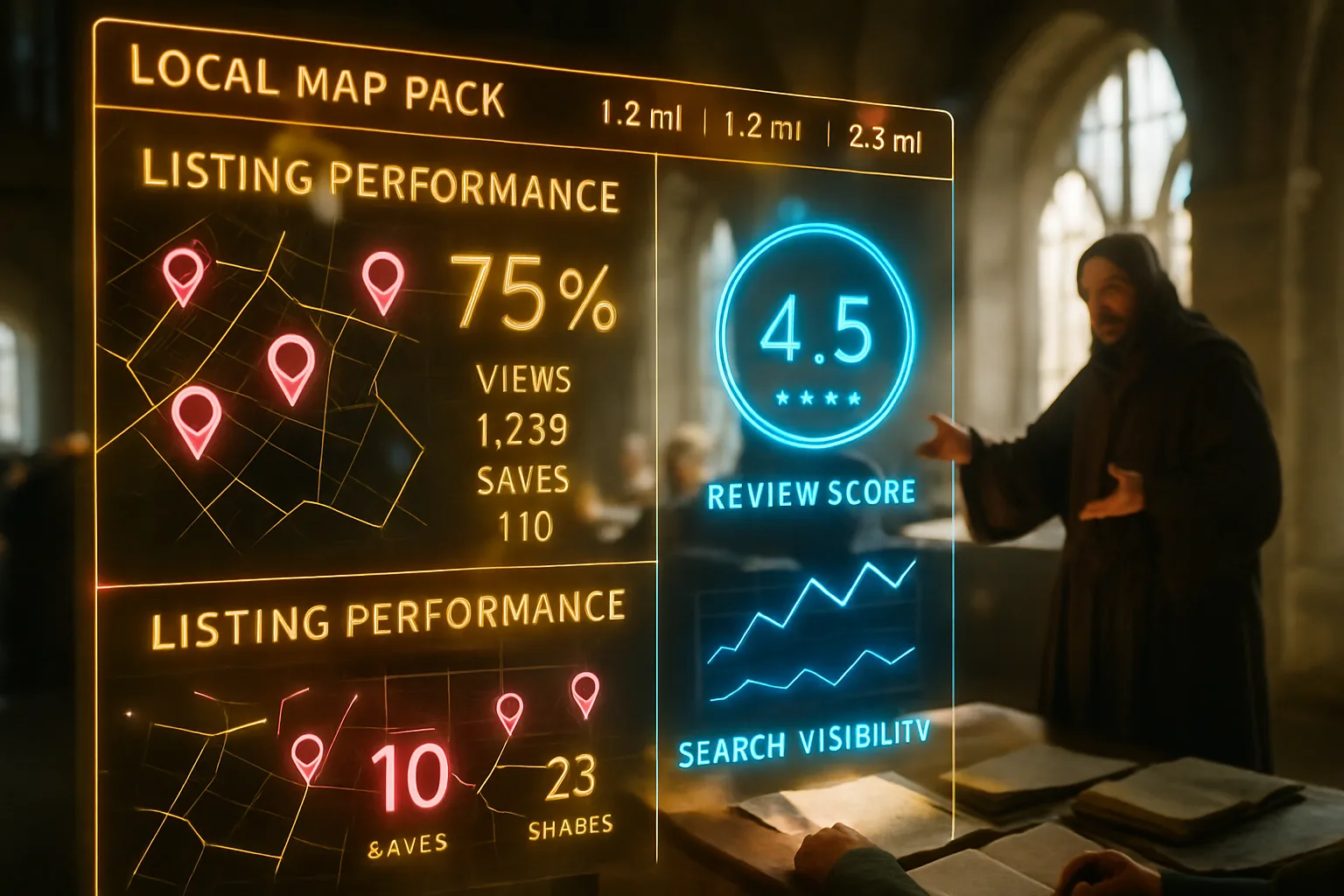
Table of Contents
- What is Google Business Profile for estate agents?
- Key takeaways
- Why the local map pack decides who gets called
- Claiming and verifying your profile: the step most agents skip
- Category selection and service areas: two settings with outsized impact
- Photos, posts, and the signals of an active profile
- Reviews: how to build them without crossing any lines
- How Google's AI features are changing profile visibility
- Writing a business description worth reading
- Closing reflection
- Frequently asked questions
A couple in Brakpan decides over Sunday breakfast to sell and downsize. By Monday morning the husband has his phone out and types "estate agent near me". A map appears with three names, photos of local street scenes, and star ratings from other sellers. One agent has listed residential sales as a service, posted five photos in the last month, and collected sixty-three reviews. His wife calls that number before lunch. An experienced agent two streets away, seventeen years in the business, doesn't appear on that map. She didn't claim her listing.
What is Google Business Profile for estate agents?
A Google Business Profile is a free listing controlling how your agency appears on Google Search and Google Maps when a buyer or seller searches for an agent in your area. It is the panel showing your name, address, phone number, opening hours, photos, and reviews before anyone visits your website. For estate agents, it is often the first contact a prospective client has with your practice, and the detail in that listing is what decides whether they call you or your competitor down the road.
Key takeaways
- A complete, verified Google Business Profile puts your agency in the local map pack, the three-name block at the top of local search results most buyers and sellers click first.
- Google ranks local listings by three signals: relevance (does your profile match what the person searched?), distance (how close are you?), and prominence (how well-known does Google think you are?).
- Reviews are the single most visible trust signal on your profile. Estate agents average around 287 reviews on Google, according to local SEO research, so building your review count is a long-term competitive advantage.
- Photos, service areas, and category selection all affect whether Google surfaces your profile for suburb-level property searches.
- Keeping your profile active with posts and updated information sends Google a signal your business is open and engaged, which supports ranking over time.
Why the local map pack decides who gets called

The map pack is the block of three business listings, with a small map alongside them, appearing near the top of Google's results when someone searches for a local service. For buyers and sellers searching "estate agent in Fourways" or "property agent near me," that block is where the decision gets made. Most searchers don't scroll past it. According to research on local search behaviour, estate agents average around 287 Google reviews, sitting above solicitors and most other professional services in review volume. That number signals how competitive the local pack has become in property. An agent outside the pack is invisible to searches in the suburb, regardless of how long she has been selling there.
Google decides which three agents appear by measuring relevance, distance, and prominence. Relevance is how well your profile matches the search. Distance is how close your office is to the searcher. Prominence is the accumulated score from your reviews, your website's authority, and how often your business name appears across the web. You can't move your office, but you control relevance and prominence almost entirely through your profile and your review strategy.
Claiming and verifying your profile: the step most agents skip
Before any optimisation is possible, you need to claim and verify your Google Business Profile. Google won't let you edit a listing you haven't verified, and an unclaimed listing can be edited by anyone, including a competitor or a dissatisfied client. Google's documentation on establishing business details confirms once you verify yourself as the owner, you control the address, contact information, hours, and every other field.
Verification for a South African estate agency typically happens by postcard sent to your registered office address. Google sends a code in the post, and you enter it in your profile dashboard. Some accounts qualify for instant video verification or phone verification, depending on how long the business has been listed. The process takes a few minutes to start and up to two weeks to complete if the postcard route is required. Don't skip it or hand it to a junior staff member without checking it is done. An unverified profile does nothing.
Once verified, work through every field in the dashboard before touching anything else. Incomplete profiles rank poorly. A profile where only the name and phone number are filled in gives Google almost nothing to assess for relevance.
Category selection and service areas: two settings with outsized impact
Google uses your primary business category to decide which searches your profile is eligible to appear in. For an estate agent, the correct primary category is "Real estate agency" or "Real estate agent", depending on whether you operate as a firm or as an individual. If you also handle rentals, add "Property management company" as a secondary category. Don't add categories describing services you don't offer; Google has been known to suppress profiles it suspects of category stuffing.
Service areas are as consequential as your physical address for estate agents, because your buyers and sellers aren't necessarily in the same suburb as your office. You can add up to twenty service areas in your profile. List the specific suburbs where you operate: Sandton, Fourways, Midrand, Bryanston, and so on, rather than broad regional labels like "Johannesburg North." Suburb-level detail is what matches a search for "estate agent in Paulshof" to your profile even if your office is in Rivonia. Research on local SEO for agents confirms a fully built-out profile with correct category selection is the foundation local visibility is built on.
Photos, posts, and the signals of an active profile

Google favours recency. A profile with its last photo uploaded two years ago signals a business possibly no longer active. A profile updated last week signals one open and operating. For estate agents, photos serve an additional function: they show buyers and sellers what kind of properties you sell, which suburbs you operate in, and whether you are a formal firm or a boutique operation.
Upload at least ten photos before you consider the profile complete. Include your office exterior so clients can find you, your team so the profile feels human, and two or three sold or listed properties representing your typical market. Avoid stock photography. Google can detect it, and buyers can too.
Beyond photos, use the Posts feature in your profile dashboard. Posts are short updates, comparable to a social media post, appearing on your profile in search results. An estate agent can use posts to promote a new listing, announce an open day, or share a recent sale in a target suburb. Each post stays visible for seven days before it drops off, so a consistent posting rhythm of once or twice a week keeps the profile looking active. This isn't a significant time commitment, and the benefit to profile visibility is real. Estate agent SEO depends on exactly this kind of consistent, low-effort upkeep.
Reviews: how to build them without crossing any lines
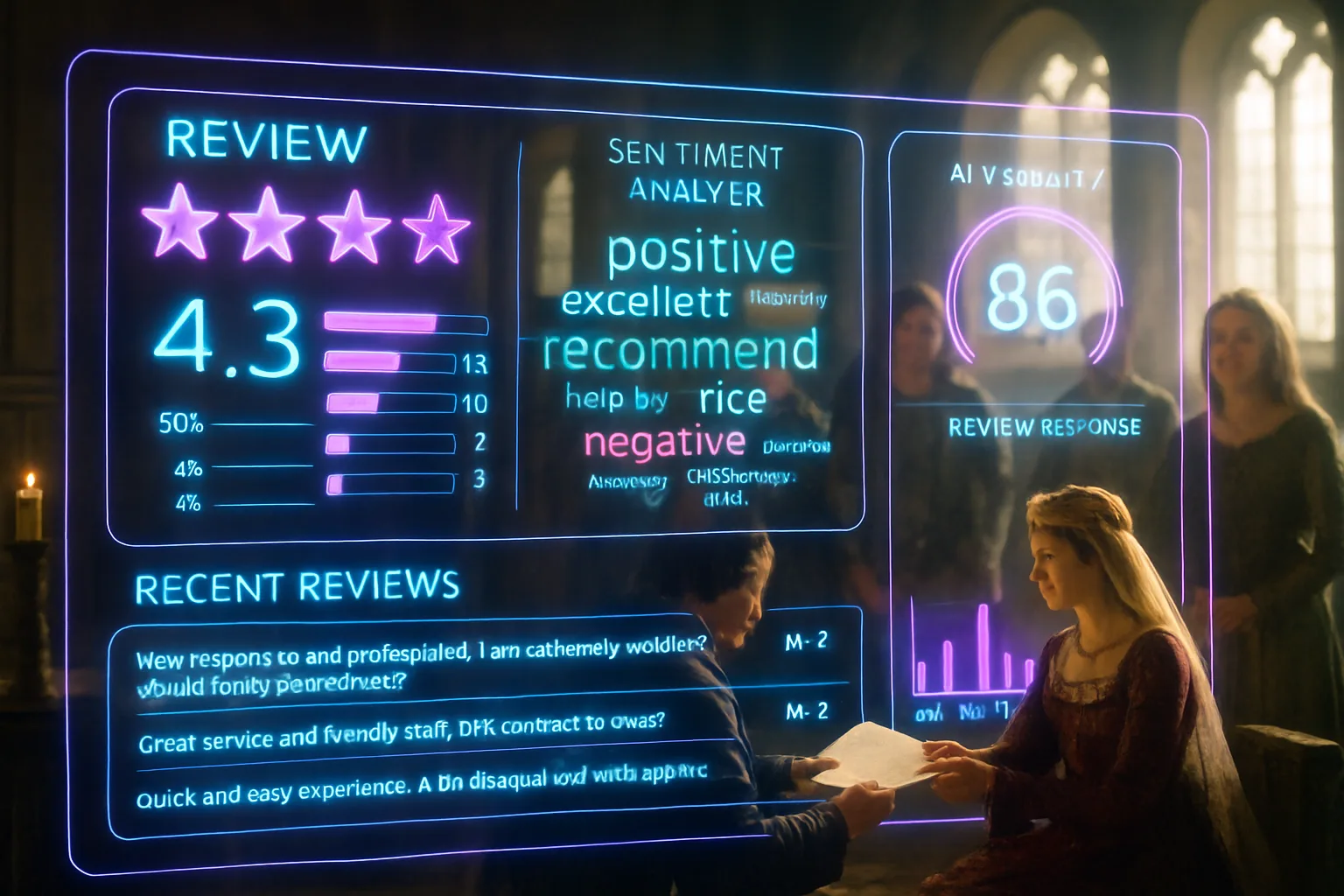
Reviews are the most public signal on your profile. A buyer choosing between two agents with similar locations and similar services will almost always call the one with more reviews and a higher average rating. The number is a proxy for trust, and in property transactions where the stakes run to seven figures, trust is the deciding factor.
The correct way to build reviews is to ask for them directly and immediately after a successful transaction. Send the buyer or seller a link to your Google review page the day they take occupation or the day transfer registers. Make the ask personal, rather than a template email. A short message from the agent who handled the transaction, with a direct link, converts far better than a generic follow-up.
What you may not do: offer incentives for reviews, post fake reviews, or ask only selected clients to leave reviews while ignoring others. Google's guidelines prohibit all of these, and the penalties, including profile suspension, are real. The right approach is a consistent ask to every completed client, accepted or declined on their own terms.
Respond to every review, including negative ones. A calm, professional response to a critical review shows prospective clients how you handle conflict, which is a trust signal in its own right. An unanswered negative review sits there and compounds.
How Google's AI features are changing profile visibility
Google has begun incorporating business profile data into AI-generated search responses. When someone asks Google a question like "which estate agents operate in Constantia?" or "who handles sectional title sales in Cape Town's southern suburbs?", Google's generative AI feature can surface individual agents by name, drawing on profile data, review content, and website information together. Google's own guidance on AI search optimisation confirms local business information from profiles feeds directly into these responses where relevant.
This is a meaningful shift for estate agents. Your profile is no longer only a map listing; it is a data source feeding into answers generated without a traditional click. An agent whose profile contains detailed service descriptions, specific suburb references, and a healthy review count is more likely to appear in those AI responses than one with a bare listing. The practical implication: treat every field in your profile as a sentence Google might quote, because in AI search, that is increasingly what happens.
The table below shows how each profile section maps to the Google signal it affects.
Profile sections and their effect on local ranking signals
| Profile Section | Signal Affected | Why It Counts |
|---|---|---|
| Business category | Relevance | Determines which searches your profile is eligible for |
| Service areas | Relevance | Matches suburb-level searches to your listing |
| Opening hours | Prominence | Affects "open now" filter results |
| Photos (recent) | Prominence | Signals active, current business |
| Reviews and responses | Prominence | Most visible trust signal for buyers and sellers |
| Posts | Relevance, Prominence | Signals activity; may appear in AI-generated responses |
| Business description | Relevance | Allows suburb and service-type keywords to appear naturally |
Writing a business description worth reading
The business description field gives you 750 characters to tell Google and prospective clients what your agency does, where you operate, and what makes you worth calling. Most agents either leave it blank or paste in a sentence from their website's homepage. Neither approach works.
Write the description as you would explain your agency to a seller at a show house: what suburbs you cover, what type of property you specialise in, and how long you have been operating in the area. Include suburb names naturally: "We handle residential sales and rentals across Centurion, Midrand, and Waterkloof Ridge." That sentence does three things. It tells the seller what you do. It tells Google which suburb searches to connect you to. And it reads like a person wrote it, rather than a keyword list.
Keep the description under 250 words. Google shows only the first few lines before a "more" link, so the most important information goes first. Don't stuff keywords or repeat suburb names unnaturally. A description written for a human reader performs better in search than one written for an algorithm, which is the same principle governing good estate agent SEO more broadly. The broader case for why search rewards genuine, useful content applies as directly to a profile as it does to a website.
Closing reflection
A Google Business Profile costs nothing to claim and a few hours to build properly. Most estate agents in South Africa either haven't claimed theirs or filled in the minimum and forgot about it. The agents treating it as a living part of their practice, kept current, stocked with photos, and fed by a consistent review strategy, are the ones appearing when a seller opens Google on a Sunday morning and decides who to call. The gap between those agents and the rest isn't skill. It is attention.
You shouldn't have to wonder why your competitors appear on the map and you don't. With Zahavah Studio, you won't.
Contact Zahavah Studio to get your Google Business Profile audited and built to the standard putting estate agents on the map for the suburbs they work in.
Estate agents often have the same questions once they understand what a Google Business Profile does and how it is scored. The answers below cover what comes up most.
Frequently asked questions
How do I set up a Google Business Profile as an estate agent?
Setting up a profile starts at Google's business listing portal, where you search for your agency name to check whether a listing already exists. If one does, you claim it. If none exists, you create one from scratch by entering your business name, category, address, and phone number. Google then asks you to verify ownership, usually by postcard to your registered office, though some accounts qualify for faster video or phone verification. Google's documentation on business profile setup walks through each step of the verification process in detail. Once verified, fill in every field: categories, service areas, hours, description, and photos. An incomplete profile ranks poorly, and the gaps are straightforward to fill. Allow two to three hours to complete the profile properly on the first pass, and plan for ongoing updates every few weeks after that. Your completed profile is what makes you visible to buyers and sellers searching by suburb, so the upfront time investment pays off directly.
How many reviews does a Google Business Profile for an estate agent need?
There is no fixed number at which a profile suddenly ranks well, but research on estate agent review benchmarks shows the average estate agent on Google has around 287 reviews. That is the competitive baseline in a market where buyers and sellers use review count as a trust signal before they call. A new profile with ten reviews can still rank in a less competitive suburb, especially if the profile is well built in every other respect. The practical target for a firm operating in a competitive area is fifty reviews within the first year, built by asking every completed client consistently. After that, focus on maintaining a strong average rating rather than chasing volume alone. Respond to every review, including negative ones, because prospective clients read the responses as closely as the reviews. A calm, professional reply to a critical review reassures prospective clients about how your agency handles difficult situations, which carries real weight in a high-stakes transaction.
Does my Google Business Profile affect my estate agency website's search rankings?
Your profile and your website are separate signals, but they reinforce each other. A well-optimised profile can drive traffic directly from Google Maps and the local pack without a website visit at all. At the same time, a website with suburb-specific content, correct contact details matching the profile, and strong technical performance supports the profile's prominence signal. The name, address, and phone number on your website should match your profile exactly, because Google cross-references them. Inconsistencies between the two suppress local visibility. For estate agents operating across multiple suburbs, a website with individual suburb pages, each linking back to the profile and using suburb-specific language, strengthens both the site's rankings and the profile's relevance signal. The relationship is bidirectional: each strengthens the other's visibility. Making sure your contact details are identical across your website, your profile, and any directories where your agency is listed is the single most overlooked fix available to you.
Can I use Google Business Profile for estate agents to promote specific listings?
You can use the Posts feature to promote individual properties, open days, or price reductions, but a Google Business Profile isn't a property portal. It won't replace your listings on Property24 or Private Property, and it isn't designed to. What Posts can do is signal activity to Google and give a prospective buyer or seller finding your profile a reason to call: a photograph of a newly listed property in their target suburb, a note about a recent sale price, or an upcoming show house event. Research on local SEO for real estate confirms profile activity, including posts and photo updates, contributes to local search visibility over time. Use Posts as a complement to your portal listings, not a replacement. A consistent posting rhythm of once or twice a week keeps your profile looking active and gives Google regular signals your business is engaged, which supports your position in suburb-level searches over time.
How long does it take for a Google Business Profile to start ranking for estate agent searches?
A verified and fully completed profile in a low-competition suburb can appear in the local pack within a few weeks. In a high-competition area like Sandton or the Atlantic Seaboard, where multiple established agencies have profiles built over years and hundreds of reviews, meaningful movement takes three to six months of consistent effort: completing every field, uploading photos regularly, gathering reviews after each transaction, and posting updates weekly. The timeline shortens when your website also carries suburb-specific content and when your business name, address, and phone number are consistent across every online directory where your agency appears. There is no shortcut. Agencies buying fake reviews or stuffing keywords into their descriptions risk profile suspension, which resets months of accumulated progress. The agents seeing the fastest results are typically those who complete every profile field from the start, post weekly, and ask every client for a review without exception.

Yvonne van Wyk
SEO Strategist · Zahavah Studio
Yvonne van Wyk runs Zahavah Studio, a Johannesburg SEO agency focused on long-term search visibility and AI citation. Her writing covers local SEO, content strategy, analytics, and the mechanics of how search works.
Everything on this blog is written to inform and educate. It is for information only. Nothing here is professional legal, financial, or technical advice. If you are making a significant business decision, speak to a qualified professional first. Zahavah Studio works hard to keep this content accurate and current, but is not liable for decisions made based on what you read here.