8 October 2026


Table of Contents
- What is internal linking SEO?
- Key takeaways
- How search engines use internal links to crawl your site
- Why anchor text is more than a label
- How link equity flows through your site
- Building a flat structure worth linking through
- What orphan pages cost you in rankings
- Using internal linking to support website architecture
- Closing reflection
- Frequently asked questions
A furniture retailer in Cape Town spent eight months writing detailed buying guides for every product category on her site. The guides were thorough, well-written, and genuinely useful. Her homepage was linked from thirty other sites. Her product pages ranked nowhere. When a developer audited the site, the problem took thirty seconds to find: none of the buying guides linked to the product pages, and none of the product pages linked back to anything. The homepage sat at one end of the site, the content at the other, and a search engine crawling from the homepage couldn't find half of it.
What is internal linking SEO?
Internal linking SEO is the practice of connecting your own pages to each other through clickable links, deliberately and in a pattern helping both visitors and search engines navigate your site. Every time one of your pages links to another page on the same domain, that is an internal link. The pattern of those links, which pages link to which and how often, tells search engines how your site is organised and which pages carry the most authority.
Key takeaways
- Internal links are the routes search engines follow to discover and index your pages. A page with no internal links pointing to it may never be found.
- The pattern of your internal links signals which pages are most important. Pages receiving many internal links from other strong pages are treated as higher priority.
- Anchor text, the words used as the clickable link, tells search engines what the destination page is about. Descriptive anchor text is more useful than "click here".
- A flat site structure, where important pages sit no more than three clicks from the homepage, keeps your most valuable content reachable and crawlable.
- Internal linking and website architecture work together. Links are how the structure you design actually gets communicated to a search engine.
How search engines use internal links to crawl your site

Search engines don't use a search box to find your pages. Google's own guidance on link architecture is direct on this point: crawlers follow links, and if a page can't be reached by following links from your homepage, it is effectively invisible. A crawler arrives at your homepage, reads its links, follows each one to a new page, reads that page's links, and continues outward. Pages sitting three or four clicks from the homepage get visited. Pages sitting eight clicks deep, or worse, pages with no links pointing to them at all, often don't.
A site can have fifty well-written pages and rank for almost none of them. If the internal link structure doesn't connect those pages into a navigable network, search engines treat them as isolated documents rather than a coherent site. Google's documentation on internal link structure describes internal linking as the mechanism by which a site communicates its own organisation to a crawler. It isn't a peripheral concern. It is the scaffolding search engines read before they read anything else.
The practical implication is straightforward: every page you want to rank needs at least one internal link pointing to it from a page already reachable and indexed.
Why anchor text is more than a label
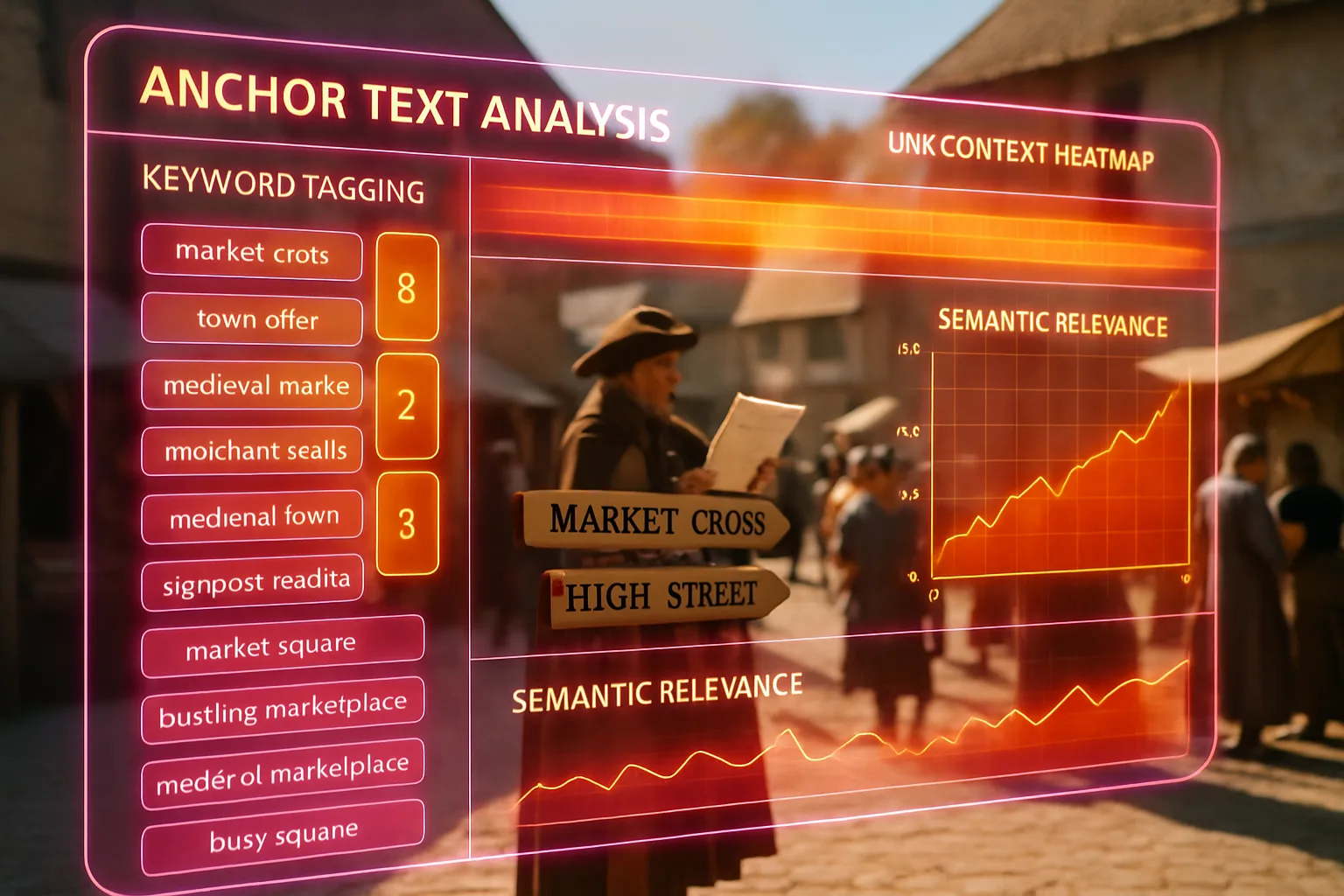
Anchor text is the clickable words inside a link. When you link to your services page using the words "our services", you tell a search engine very little about what that page covers. When you link to it using the words "commercial cleaning contracts in Nairobi", you give the search engine a specific signal about the destination's topic and relevance.
Google's documentation on crawlable link practices notes paying attention to anchor text for internal links helps both people and Google make sense of the destination page. That guidance is often ignored for internal links because businesses focus their anchor text effort on external links pointing to them from other sites. The opportunity inside their own site gets left on the table.
The standard failure is every link reading "click here", "read more", or "find out more". Those phrases tell a search engine nothing. Descriptive anchor text, written naturally in the surrounding sentence, costs nothing to produce and adds a meaningful signal every time a page is linked. Use the words a reader would expect to find on the destination page. Keep it concise and specific, not a full sentence turned into a link.
How link equity flows through your site
When an external site links to your homepage, it passes a form of trust and authority to that page. Search engines treat this authority as a resource your site holds. Internal links redistribute that resource across your site: the pages your homepage links to receive some of it, the pages those pages link to receive less, and so on outward. The SEO industry calls this link equity, and it flows through your internal link structure the same way water flows downhill.
Research across internal link distribution spanning 23 million internal links and 1,800 websites found a consistent pattern: pages receiving more internal links from pages themselves well-linked tend to perform significantly better in search rankings. The correlation isn't perfect, but the direction is consistent enough to treat as reliable.
A page buried at the bottom of your site, reachable only through one link from an obscure category page, will consistently underperform relative to the quality of its content. If that page covers a genuinely valuable topic, link to it from your homepage, your most-visited blog posts, and your service pages wherever the topic is relevant. The content doesn't change. Its position in your site's authority hierarchy does.
How internal link equity flows from the homepage outward
| Page level | Example | Typical internal links in | Authority received |
|---|---|---|---|
| Homepage | yourdomain.com | Many (external + nav) | Highest |
| Top-level pages | /services, /about | 5 to 15 | High |
| Category pages | /services/cleaning | 2 to 8 | Medium |
| Individual articles | /blog/office-cleaning-tips | 1 to 3 | Lower |
| Orphan pages | /old-promo | 0 | None |
Building a flat structure worth linking through
A flat site structure is one where any important page sits no more than three clicks from the homepage. Most small business sites are built this way by instinct: homepage, then a handful of main pages, then individual posts or product pages underneath. The structure is sound. The internal linking usually isn't, because the pages don't actually link to each other in any deliberate way.
The gap between a good structure and a crawlable one is the contextual link: a link inside the body text of one page pointing to a related page elsewhere on the site. Navigation menus link to top-level pages. Contextual links connect the content layer, where most of the valuable, specific information lives. A guide on "how to choose a conveyancing attorney" should link to the firm's page on transfer timelines. A product page for hardwood flooring should link to the buying guide covering maintenance. These connections aren't just useful to readers; they are the routes search engines follow to understand your site's topic depth.
Research on site crawlability and structure consistently shows a logical internal linking structure improves both crawl efficiency and topical authority signals. Neither benefit requires a technical project. Both require someone to read each page on the site and ask: what else on this site is genuinely relevant to what this page covers?
What orphan pages cost you in rankings
An orphan page is a page on your site with no internal links pointing to it. It exists. It can be typed into a browser directly. Search engines may or may not have found it. Because nothing on your site links to it, it sits outside your internal authority network entirely. However good the content is, the absence of internal links leaves it at a structural disadvantage.
Industry data on internal link importance shows 8 percent of SEO professionals rank internal links as the single most important ranking factor, and 42 percent spend as much time on internal linking as they do on external link building. That split reflects a growing recognition: the links you control entirely, the ones inside your own site, are worth auditing as carefully as the ones pointing in from outside.
Finding orphan pages is straightforward. In Google Search Console, you can compare the list of pages Google has indexed with the pages you know exist on your site. Pages appearing in one list but not the other are candidates for investigation. Some will be old, irrelevant pages worth removing. Others will be valuable pages worth linking to immediately.
Using internal linking to support website architecture

Internal linking doesn't distribute authority alone. It reinforces the topic signals your site's architecture is designed to send. When your website architecture is built around clusters, a main page on a broad topic supported by several detailed pages covering specific sub-topics, internal links are what connect those pages into a recognisable cluster. A cluster without internal links is a filing cabinet where the drawers don't connect.
Guidance on SEO internal linking strategy highlights the types of links doing this work: navigational links in menus, contextual links within body text, and supporting links in sidebars or footers. Each type carries a different signal. Contextual links, the ones embedded in sentences where the surrounding words reinforce the relevance, carry more signal than footer links because they appear in a meaningful context. A link inside a paragraph about "commercial lease agreements" pointing to a page on "lease dispute resolution" is more informative to a search engine than the same link sitting in a footer alongside fifteen others.
The architecture principle is clear: links aren't just navigation aids. They are the mechanism by which your website communicates its own structure to a search engine. Moz's guidance on link equity distribution makes the same point: internal links establish site architecture and spread authority in a way no other on-site element replicates. Building good architecture and then ignoring internal linking is like drawing a floor plan and then not installing the doors.
Closing reflection
Most sites have more valuable content than search engines ever find. The problem is rarely the content. It is the absence of a deliberate link structure letting a crawler, following links from page to page, discover and weigh every page the site contains. Internal linking is unglamorous work. No dashboard makes it look impressive, and no agency will sell it as a headline deliverable. The sites ranking consistently are almost always the ones where someone thought carefully about which pages link to which, and why.
You shouldn't have to guess which of your pages search engines are actually finding and weighing.
Contact Zahavah Studio to audit your internal link structure and build a crawlable architecture your best pages deserve.
Internal linking raises a handful of practical questions most audits surface. The ones below are worth answering before you start.
Frequently asked questions
What is internal linking in SEO?
Internal linking in SEO is the practice of connecting pages on your own website to each other through clickable links. When your homepage links to your services page, or your blog post links to a related product page, those are internal links. In SEO terms, they do two things. First, they give search engines a route to follow when discovering your pages. A crawler arriving at your homepage follows those links outward, page by page, and any page with no internal links pointing to it may never be found. Second, they signal which pages your site considers important. A page receiving ten internal links from other well-linked pages is treated differently from a page receiving one link from a rarely-visited archive. Your internal link structure is the map your site gives to search engines. The more deliberate and accurate that map is, the more completely your site gets understood and indexed. Reviewing your link structure once or twice a year keeps that map reliable as your site grows.
How many internal links should a page have for internal linking SEO?
There's no fixed number, and any agency quoting one is guessing. The useful question isn't how many, but whether every important page on your site has at least one internal link pointing to it from a page already well-connected and indexed. Beyond that floor, internal links should appear wherever they are genuinely useful: where the destination page adds context, answers a question the current page raises, or covers a related topic the reader would reasonably want to read next. A page with no internal links is an orphan. A page with forty internal links stuffed into a single paragraph is treated as manipulation. The practical range for a typical blog post or service page sits between three and ten contextual links, placed naturally in the body text where they add meaning rather than noise. Quantity follows relevance; it doesn't substitute for it. If you're auditing your own site, start by checking your highest-traffic pages and confirming each one links to at least two or three related pages further into the site.
Why are internal links important for SEO?
Internal links are the routes search engines follow to move through your site. Without them, pages sit in isolation, regardless of how good the content is. A page search engines can't reach can't rank, and a page they can reach but rarely visit, because nothing important links to it, tends to rank far below its potential. Beyond discovery, internal links redistribute the authority your site earns from external links pointing to it. That authority flows from page to page through your internal link structure. A homepage with strong external links passes some of that authority to the pages it links to, and those pages pass it further outward. Your site's most valuable pages, the ones covering topics you most want to rank for, should sit close to the top of that flow, not buried four or five clicks deep with a single link from an obscure category page. Mapping your ten most important pages and counting how many internal links each receives is a practical starting point for any link structure review.
How do I find orphan pages on my site using internal linking SEO tools?
Google Search Console gives you a list of pages Google has discovered and indexed. Compare that list to every URL you know exists on your site. Pages present on your site but absent from Search Console's coverage report are likely orphans: pages search engines haven't found because nothing links to them. A site crawler tool such as Screaming Frog can also map every URL on your site and flag pages with no internal links pointing to them. Once you have the list, the decision is straightforward: either remove the page if it adds no value, or add internal links to it from relevant, well-connected pages elsewhere on your site. Orphan pages are almost always the result of content published without anyone checking whether the rest of the site links to it. Running a short audit once or twice a year catches them before they become a long-term drag on your rankings. Even a single well-placed contextual link from a strong page can bring a previously invisible page into Google's active index.

Yvonne van Wyk
SEO Strategist · Zahavah Studio
Yvonne van Wyk runs Zahavah Studio, a Johannesburg SEO agency focused on long-term search visibility and AI citation. Her writing covers local SEO, content strategy, analytics, and the mechanics of how search works.
Everything on this blog is written to inform and educate. It is for information only. Nothing here is professional legal, financial, or technical advice. If you are making a significant business decision, speak to a qualified professional first. Zahavah Studio works hard to keep this content accurate and current, but is not liable for decisions made based on what you read here.